Why Properly Inflated Bike Tyres Matter in 2026
Safety, Performance, and Efficiency
Properly inflated bike tyres are crucial for your safety and cycling performance. The right pressure improves grip, reduces rolling resistance, and prevents flats. In 2026, with advanced materials and e-bike popularity, correct inflation is even more important. Efficiently inflated tyres also help you save energy, making every ride smoother and faster.
Common Myths About Bike Tyre Inflation
- More pressure is always better: Over-inflation can cause less grip and comfort.
- You only need to check pressure occasionally: Temperature and use can change tyre pressure daily.
- All pumps work for every bike: Valve types and new high-pressure systems require suitable pumps.
Understanding Bike Tyre Valves and Pump Types
Presta vs. Schrader vs. Dunlop: What Cyclists Should Know
Most bikes use one of three valve types:
- Presta: Slim, found on road and performance bikes. Unscrew the tip before pumping.
- Schrader: Like car valves. Wider, common on mountain and hybrid bikes.
- Dunlop: Mainly in some regions. Similar shape to Presta but different inner mechanism.
Manual, Electric, and Hybrid Pumps Explained
- Manual pumps: Traditional, reliable, and portable. Includes floor and mini pumps.
- Electric pumps: Fast, require charging, some have smart features.
- Hybrid pumps: Combine manual and electric modes for flexibility.
Pros and Cons: Staying Up-to-Date With 2026 Pump Technology
- New 2026 pumps offer digital PSI readouts and app control.
- Some connect to bike computers for pressure tracking.
- Battery life and durability are key considerations in modern pumps.
Choosing the Right Pump for Your Bike and Riding Style
Road Bikes, Gravel, and MTB: Pump Compatibility
Road bikes need pumps handling high pressure (100 PSI+). Gravel and mountain bikes require less pressure but higher volumes. Check if your pump fits your bike’s valve and pressure needs.
Tubeless Setups and High-Pressure Needs
Tubeless tyres often need a strong, fast burst of air to seat on the rim. Some 2026 pumps feature special “blast” modes for this task.
Compact, Portable, and Home Pump Options
- Compact/mini pumps: Lightweight, easy to carry, slower to reach high PSI.
- Portable electric pumps: Rechargeable, accurate, fit in your bag, suitable for emergencies.
- Home/floor pumps: Large, stable, fast inflation, more accurate gauges.
How to Pump Up Bike Tyres: Step-by-Step Instructions
Quick Checklist: What You Need Before Starting
- Right pump (manual or electric) for your valve
- Pressure gauge or pump with digital display
- Tyre pressure recommendations (printed on tyre sidewall or use calculator below)
- Clean rag (optional for dirty valves)
- Valve adaptor (if needed)
Step 1: Identify Your Valve Type and Remove the Cap
- Look at your bike’s tyre valve—determine if it’s Presta, Schrader, or Dunlop.
- Unscrew and remove the plastic or metal cap from the valve.
- If it’s a Presta valve, unscrew the small metal tip until it moves freely.
Step 2: Secure the Pump Head Properly (with Visual Guide)
- Match your pump head to the valve (check for adaptors if needed).
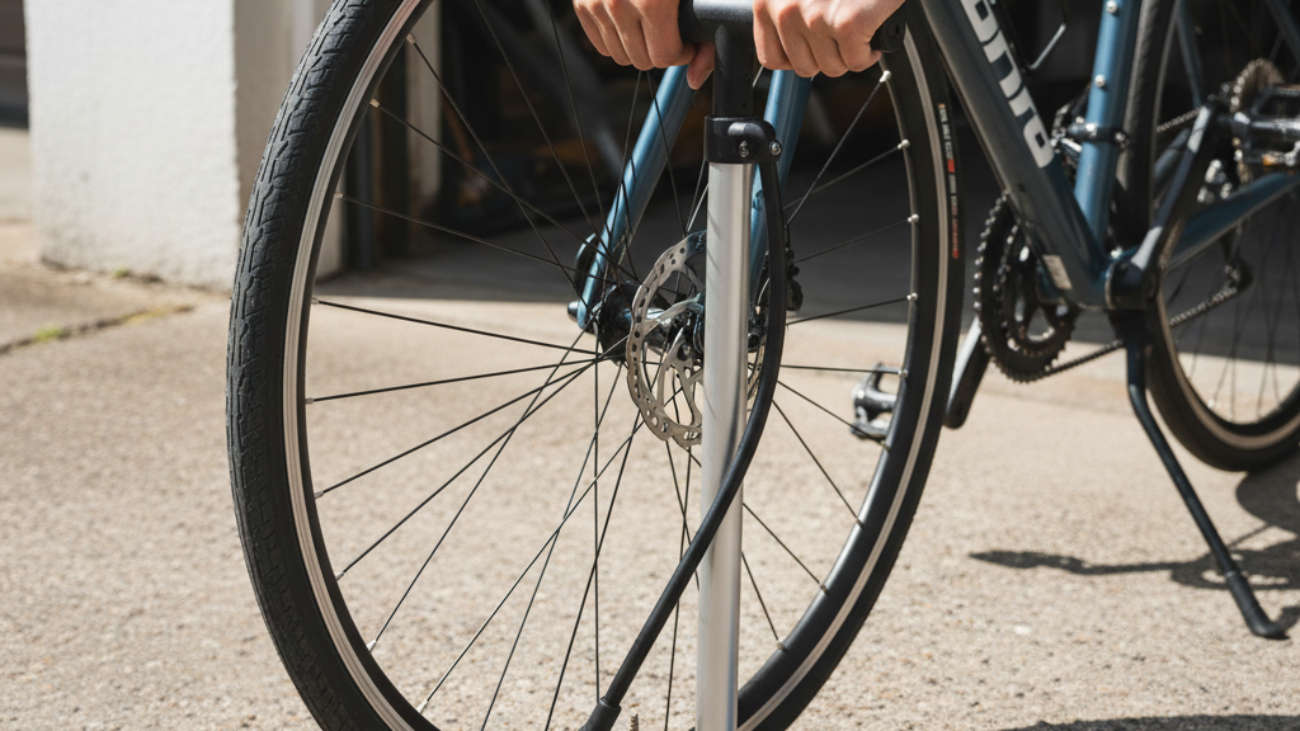
- Attach the head securely; for most pumps, push down and lock the lever if present.
- Check for a snug fit—no hissing means a good seal.
Step 3: Inflate to the Correct PSI (2026 Tech Tips for Accuracy)
- Check the tyre’s maximum and recommended PSI (printed on sidewall or in bike manual).
- For manual pumps, pump steadily, checking pressure every 10 strokes.
- For electric pumps, set the target PSI digitally and let the pump work.
- Modern pumps might have auto-stop features for accuracy.
Step 4: Finishing Up and Safety Checks
- Once at the right PSI, unlock and remove the pump head quickly to avoid air loss.
- Re-screw the cap onto Presta or Schrader valves.
- Spin the wheel and listen for leaks. Press the tyre with your thumb for a quick firmness check.
Using Electric and Portable Pumps: Practical Tips for 2026
Step-by-Step Guide: Electric Inflator Operation
- Check battery level and charge if necessary.
- Choose the right valve mode on the pump (Presta or Schrader).
- Set the target PSI using buttons or the linked smartphone app.
- Attach securely and press start. Wait for the auto-stop.
Typical PSI Settings and Battery Life Considerations
- Road bike: 80-110 PSI
- Gravel: 35-70 PSI
- MTB: 20-40 PSI
- Keep pump charged—most pumps inflate 4-10 tyres per charge, depending on battery size and pressure used.
App Integrations and Smart Features
- Some pumps link with bike computers or phones for tracking and reminders.
- Set profiles for different bikes or riding styles.
- Receive notifications for recommended maintenance and battery charging.
Avoiding Common Tyre Inflation Mistakes
Over-Inflation, Under-Inflation, and Blowouts
- Over-inflation decreases grip and comfort—risk of tyre blowout increases.
- Under-inflation causes pinch flats and sluggish rides.
- Always stay within tyre and rim manufacturer PSI limits.
Preventing Valve and Rim Damage
- Do not force the pump head onto the valve.
- Avoid bending the valve, especially on Presta types.
- Never inflate beyond rim’s max pressure—risk of failure is high.
Special Precautions for Tubeless Systems
- Use pumps able to deliver high airflow bursts.
- Check sealant levels before seating tubeless tyres.
- Inspect valve cores for clogs or leaks regularly.
Troubleshooting Tyre Pumping Problems
Pump Won’t Seal on Valve: Fixes and Hacks
- Check if the pump head matches the valve type.
- Replace worn pump rubber gaskets.
- Clean dirty or muddy valves before attaching pump.
No Pressure Reading or Stuck PSI
- Ensure gauge is functioning; replace if broken.
- For digital pumps, reboot or replace the battery.
- If pressure won’t rise, check for punctures or faulty valve cores.
When to Replace Your Pump or Check for Leaks
- If the pump struggles to inflate or leaks air, inspect hose and fittings.
- Regularly replace seals and check the accuracy of pressure gauges.
- Upgrade to a new model if your pump is outdated or unreliable.
Maintenance Tips for Bike Tyres and Pumps in 2026
Regular Inspection Checklist
- Check tyre pressure before every ride.
- Look for cuts, punctures, or sidewall damage on tyres.
- Inspect valves for leaks or bends.
Cleaning and Storing Your Pump
- Wipe down your pump after rides, especially after wet conditions.
- Store pumps in a dry indoor place to avoid rust and damage.
- Recharge electric pumps monthly.
Best Practices for Longevity
- Do not over-tighten or force attachments.
- Avoid dropping or knocking electric pumps.
- Follow manufacturer service schedules for best results.
Interactive Section: Tyre Pressure Calculator and PSI Tables by Bike Type
2026 PSI Recommendations for Road, Gravel, MTB, and E-Bikes
| Bike Type | Rider Weight | Tyre Width | Recommended PSI |
|---|---|---|---|
| Road | Under 60kg | 23-25mm | 80-100 |
| Road | Over 60kg | 25-28mm | 90-110 |
| Gravel | All | 32-40mm | 35-70 |
| MTB | All | 2.1-2.4” | 20-40 |
| E-Bike | All | Varies | +5 PSI over standard suggestion |
Downloadable and Printable Checklists
- Prepare a printed copy of this guide and PSI table for your garage or bag.
- Use online tyre pressure calculators for more personal adjustments.
Frequently Asked Questions About Pumping Up Bike Tyres (2026 Edition)
What’s the Fastest Way to Pump Tyres on Group Rides?
Use a high-capacity electric pump or quick-action manual pump. Prepare all tools in advance, and make a habit of checking pressure before group rides.
Are Portable Inflators Safe for High-Performance Tyres?
Yes, most modern portable electric pumps have precise pressure control and auto-stop features to avoid over-inflation. Always set the correct PSI before use.
Should You Pump Tyres Before Every Ride?
For best safety and performance, check and top-off tyre pressure before every ride. Modern pumps and apps make this quick and easy.
Additional Resources and Video Guides for Pumping Bike Tyres
Top 2026 Demonstration Videos and Tutorials
- Search platforms like YouTube for the latest “2026 bike tyre inflation tutorial”.
- Look for manufacturer-specific guides for your pump model.
Where to Find In-Person Workshops and Community Events
- Check local bike shops and cycling clubs for tyre care classes.
- Attend community rides with demonstration booths and pro mechanics.