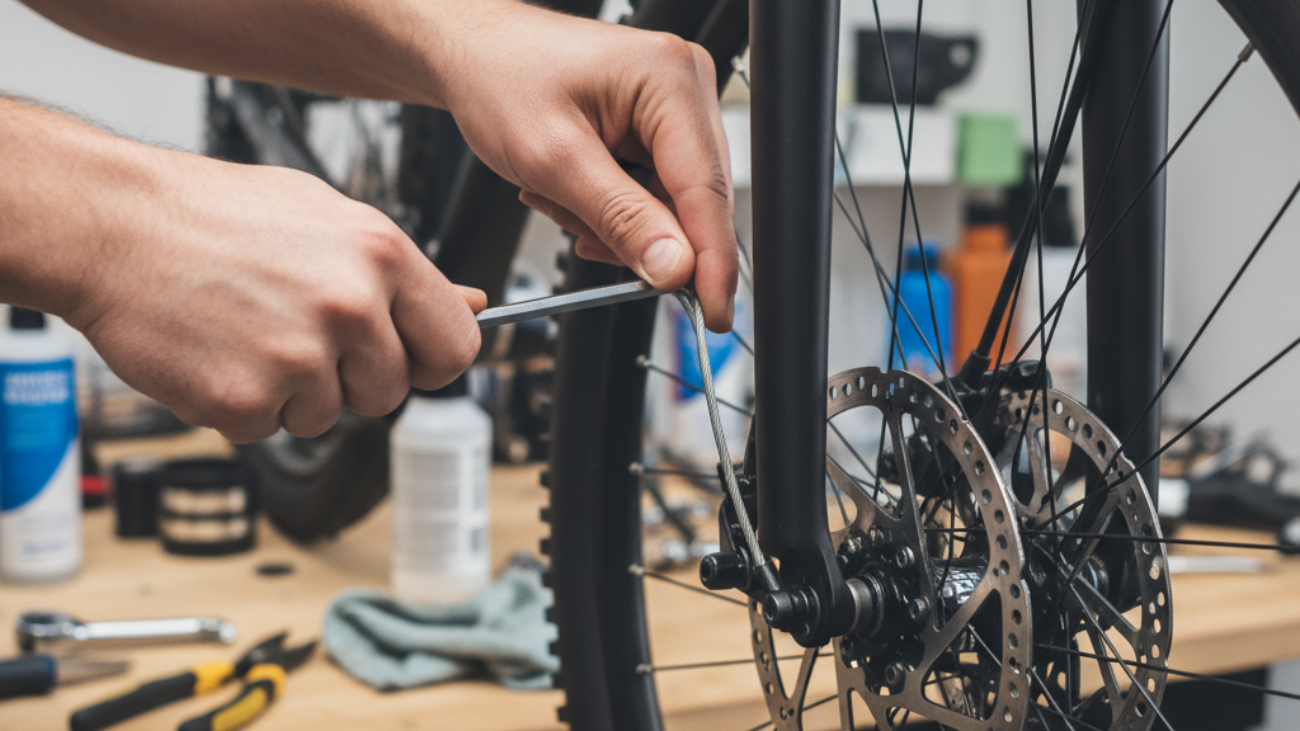
If your bike brakes feel loose or weak, it’s time to tighten them. Strong and well-adjusted brakes are essential for safe riding. This step-by-step guide is tailored for grade 9 students and covers how to tighten bike brakes of all types. Follow the steps below to make sure your bike stops quickly and safely.
Understanding Bike Brakes: Types and Key Components
Overview of Common Brake Systems (Rim, V-Brake, Mechanical Disc, Hydraulic Disc)
- Rim Brakes: Use rubber pads to squeeze the rim of the wheel. Common on many bikes.
- V-Brakes: A type of rim brake, but with longer arms. Often found on mountain and hybrid bikes.
- Mechanical Disc Brakes: Use a cable to move pads onto a disc (rotor) attached to the wheel. Popular on entry-level disc brake bikes.
- Hydraulic Disc Brakes: Use fluid to press pads onto the rotor. These provide strong and smooth braking, common on higher-end bikes.
Essential Brake Parts Involved in Tightening
- Brake levers
- Brake cables or hydraulic lines
- Barrel adjusters
- Brake calipers or arms
- Brake pads
- Wheel rim or brake rotors
Tools & Preparation for Tightening Bike Brakes in 2026
Updated Tool Recommendations for Modern Bikes
- Allen wrenches (usually 4mm, 5mm, and 6mm)
- Cable cutters (for cable brakes)
- Phillips and flathead screwdrivers
- Torque wrench (for disc brakes)
- Clean rag and degreaser
- Gloves for safety
Preparing Your Workspace and Safety Best Practices
- Choose a flat, well-lit area for your work.
- Keep tools within easy reach.
- Always secure your bike with a stand or by leaning it against a wall.
- Wear gloves to protect your hands from dirt and sharp cables.
Visual Inspection Checklist Before Adjustment
- Check for frayed or rusty cables.
- Look for worn-out brake pads.
- Ensure wheels are true (not wobbly) and secure in the frame.
- Inspect discs or rims for dirt and damage.
How to Tighten Rim Brakes
Quick Fixes Using Barrel Adjusters
- Locate the barrel adjuster on the brake lever or where the cable enters the caliper.
- Turn the barrel adjuster counterclockwise to increase brake pad tension.
- Test by squeezing the brake lever. Repeat if needed.
Cable Adjustment: Step-by-Step Instructions
- Loosen the cable anchor bolt with an Allen wrench.
- Pull the brake cable tighter with one hand.
- While holding the cable, tighten the anchor bolt firmly.
- Check for proper brake lever feel.
Pad Positioning and Alignment for Optimal Performance
- Loosen pad mounting bolts.
- Adjust pads so they contact the rim flatly, not touching the tire.
- Tighten bolts securely.
- Spin the wheel to ensure pads do not rub the rim when not braking.
Final Safety and Performance Checks
- Squeeze brake levers hard to test stopping power.
- Ensure levers do not touch handlebars when pulled.
- Test ride at slow speed and double-check work.
How to Tighten V-Brakes Effectively
Identifying V-Brake Issues and Symptoms
- Loose brake levers
- Brake pads too far from rim
- Uneven pad contact when braking
Cable Tension Adjustments: Detailed Process
- Press brake arms together by hand.
- Loosen the cable fixing bolt.
- Pull cable tight, then re-tighten the bolt.
- Fine-tune with the barrel adjuster if needed.
Spring Tension and Lever Reach Adjustments
- Use a Phillips screwdriver to turn the small screws on each brake arm. This balances arm movement.
- Adjust lever reach screw on the brake lever for hand comfort, if available.
Testing and Fine-Tuning for V-Brakes
- Check pad alignment with the rim.
- Ensure both pads touch the rim at the same time.
- Test by squeezing levers and spinning the wheel.
How to Tighten Mechanical Disc Brakes
Leveraging the Barrel Adjuster for Minor Tweaks
- Turn the barrel adjuster on the brake lever or caliper to increase tension.
- Test the brake lever’s firmness. Readjust if necessary.
Caliper Alignment and Pad Adjustments
- Loosen the caliper mounting bolts.
- Squeeze the brake lever to center the caliper over the rotor.
- While holding the lever, re-tighten bolts. Test by spinning the wheel.
- Adjust pad in/out screws if your system has them.
Rotors, Pads, and Cable Maintenance Tips
- Wipe rotors with a clean, degreased rag.
- Check pads for wear and replace if thin.
- Inspect cable for fraying or slack; replace if damaged.
Troubleshooting Common Mechanical Disc Brake Problems
- Brake rub on the rotor: Re-align caliper.
- Weak braking: Check cable tension and pad condition.
- Noise: Clean rotor and pads, adjust pad location.
How to Tighten Hydraulic Disc Brakes
Safety Precautions Specific to Hydraulic Systems
- Do not touch brake pads with oily hands.
- Always check for fluid leaks before working.
- Wear gloves and eye protection.
Lever Reach Adjustment and Pad Clearance
- Locate the reach adjustment knob or screw on the lever.
- Turn it to move the lever closer or farther from the handlebar.
- If pads are too far, seek professional help to add fluid (if needed).
Bleed and Maintenance Basics (When Tightening Isn’t Enough)
- If the brake feels spongy, a fluid bleed is needed.
- Bleeding pushes air out of the hydraulic line.
- Bleeding requires special kit and video guidance or professional service.
Signs Hydraulic Brakes Need Professional Service
- Persistent soft lever feel after adjustments
- Visible fluid leaks
- Damaged hydraulic lines
Troubleshooting: When Bike Brakes Won’t Tighten Properly
Diagnosing Persistent Brake Issues
- Brake lever moves too close to handlebars
- Pads do not contact rim or rotor effectively
- Strange noises or rubbing that adjustments do not fix
How to Identify Worn Components
- Brake pads worn below indicator line or less than 3mm
- Cables frayed or kinked
- Rim or rotor is scratched, bent, or dirty
Visual and Functional Brake Test Techniques
- Lift each wheel and spin it quickly.
- Apply the brake and ensure the wheel stops immediately.
- Check if the pad contacts the rim or rotor evenly.
Best Practices and Common Mistakes When Tightening Bike Brakes
Avoiding Over-Tightening and Brake Rub
- Do not overtighten cables or bolts. This could cause brake rub or component damage.
- Always check pad position before finishing adjustment.
Recommendations for Longevity and Safety
- Inspect brakes before every ride.
- Replace pads, cables, or fluid as soon as you see wear or leaks.
- Clean braking surfaces regularly.
Myths About Brake Adjustment Debunked in 2026
- Myth: Tighter brakes are always better. Reality: Balance control and stopping power is key.
- Myth: Only professionals can adjust brakes. Reality: With practice, anyone can do it safely.
Visual Aids: Diagrams and Video Recommendations
Diagrams for Every Brake Type (Downloadable)
- Search online for “bike brake system diagrams 2026”.
- Download diagrams for rim, V-brake, mechanical, and hydraulic disc brakes.
Trusted 2026 Video Tutorials to Follow
- Look for recent videos from well-known bike channels.
- Recommended: Park Tool, GCN Tech, and manufacturer-specific videos.
Frequently Asked Questions on How to Tighten Bike Brakes
- How do I know my brakes are tight enough?
- What if my brake lever still feels loose after adjustment?
- Can I use WD-40 on my brake parts?
Additional Resources: Maintenance Schedules and Trusted Brands for Tools in 2026
- Follow your bike manual’s maintenance schedule. Check brakes every month and replace components as recommended.
- Trusted tool brands in 2026 include Park Tool, Lezyne, and Shimano.
- Visit local bike shops or online resources for new tool releases.
Now you know how to tighten bike brakes for every brake system used in 2026. Stay safe, check your brakes regularly, and keep riding!