
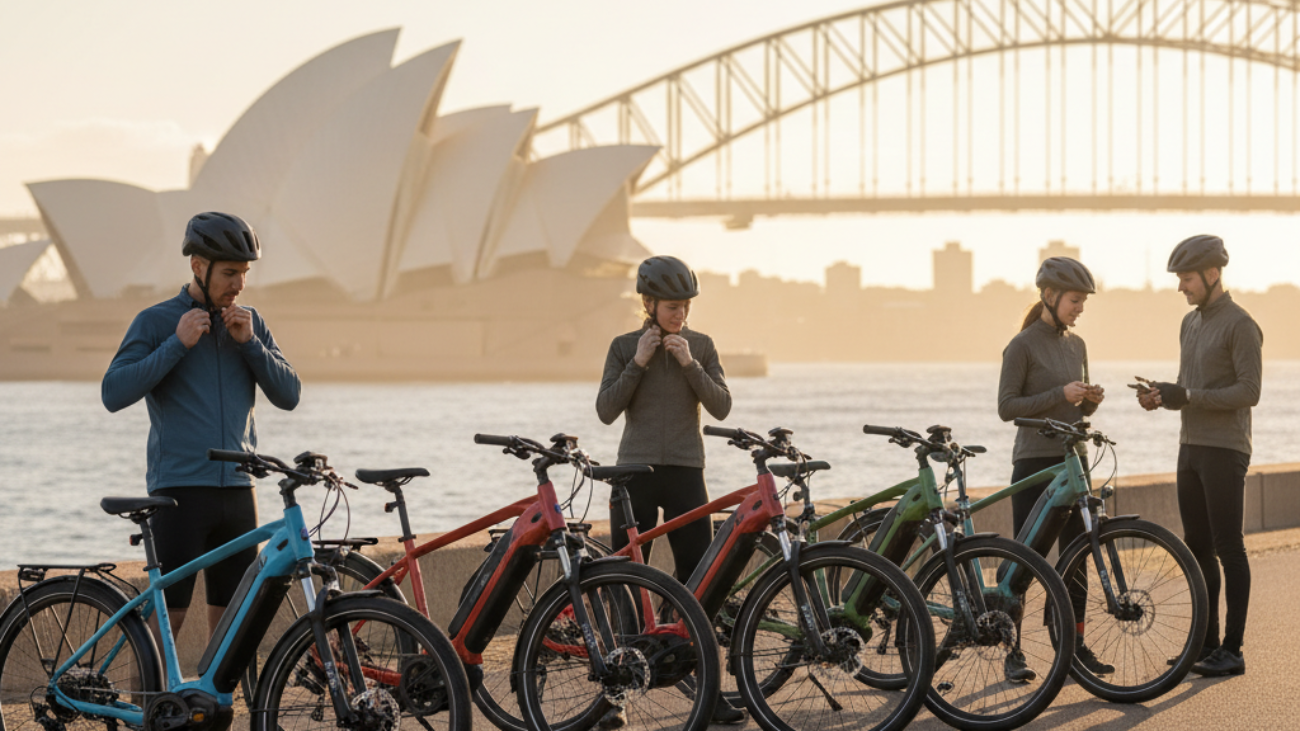
Understanding Electric Bikes in Australia (2026 Update)
What Defines an Electric Bike in Australia?
An electric bike (e-bike) in Australia is a bicycle with an electric motor that helps you pedal. In 2026, a legal e-bike has a motor up to 250 watts and works only when you are pedaling (called pedal-assist). Throttles are allowed only for low speeds and short boosts. E-bikes must also follow certain speed and safety rules.
Key 2026 E-Bike Regulations and Laws
In 2026, new laws in Australia keep e-biking safe and fair. Main rules include:
- Maximum motor power: 250 watts
- Top speed with motor help: 25 km/h
- E-bikes must have working pedals and meet Australian safety standards
- Helmet use is mandatory
- Some states require e-bike registration, especially for faster models
Recent Advances: What’s New in Electric Bikes This Year?
In 2026, e-bikes in Australia feature smarter batteries, AI-powered gear shifting, improved app connectivity, real-time traffic alerts, and better safety systems like automatic lights and crash detection.
Step-By-Step: How to Choose the Best Electric Bike for Your Needs
1. Assessing Your Riding Goals and Lifestyle
Think about how you plan to use your e-bike. Are you commuting to school or work, exploring trails, delivering goods, or just having fun? Your riding purpose helps narrow down your options.
- Write down where and how often you’ll ride (e.g. daily commute, weekend adventures).
- Consider the typical distance and terrain (flat city streets or hilly suburbs?).
- Decide if you need to carry extra items, children, or groceries.
2. Types of Electric Bikes Available in Australia
- Commuter E-Bikes: Good for daily city riding. Comfortable and fast.
- Cargo E-Bikes: Built to carry loads, shopping, or children.
- Mountain E-Bikes: Designed for off-road paths and rough trails.
- Folding E-Bikes: Compact and portable, ideal for travel and storage.
- Specialty E-Bikes: Includes fat-tire and road racing models.
3. Must-Have Features for Australian Riders in 2026
- Motor: Look for reliable brand motors (250W, mid-drive options offer better hills performance).
- Range: Most modern e-bikes offer 60-120 km per charge. More is better for longer commutes.
- AI Technology: Features like smart shifting, real-time route guidance, and battery health alerts.
- Safety: Integrated lights, reflective tyres, ABS braking, and crash detection.
- Battery: Removable for charging, fast-charging compatible, and weather-resistant.
4. Budgeting and Financing Your E-Bike in 2026
- Set a budget: Good e-bikes range from $1,500 to $6,000 AUD. Higher prices often mean better tech and build.
- Check for government incentives: Look for rebates or discounts for students and commuters in your state.
- Compare financing: Many retailers offer payment plans or e-bike leasing options in 2026.
Test Riding & Comparing the Best Electric Bikes Australia Has to Offer
1. How to Test Ride an Electric Bike in Australia
- Find local bike shops or demo events. Many offer free or low-cost test rides.
- Bring your identification and wear closed shoes and a helmet.
- Ask staff to set up the bike for your height and weight.
- Try different speeds, hills, and settings during your ride.
2. What to Look for in Real World Australian Conditions
- Comfort on bumpy paths and city streets
- Battery performance on hills and in warm weather
- Ease of removing and charging the battery
- Smoothness of pedal-assist and gear changes
3. Trusted Places to Compare E-Bikes Near You
- Independent bike shops: Knowledgeable staff, support, and aftercare
- Large retailers: More models, seasonal offers
- Online: Websites offering side-by-side comparisons and verified reviews
- Community groups: Ask for recommendations from local e-bike riders
Navigating the 2026 Buying Process for Electric Bikes
1. Where to Buy: Dealer, Online, and Retail Options
- Authorised bike dealers: Test rides, expert help, and local support
- Online shops: Wider model selection, home delivery
- Chain retailers: Fast availability, mix of services
2. Essential Questions to Ask Before Purchase
- Does this e-bike meet 2026 Australian laws?
- What is the warranty period for the frame, motor, and battery?
- How long does the battery last? Cost to replace?
- What after-sales support is offered locally?
- Is insurance required or recommended?
3. Understanding Warranties, Returns, and Post-Purchase Support
- Check warranty length: Good brands offer 2+ years for major parts
- Understand return policies for unused bikes
- Choose brands with strong service networks or local repair centers
Your First Months: Safely Owning and Enjoying Your Electric Bike
1. Australian Safety Checks and Maintenance Routines
- Inspect brakes, tyres, and lights weekly
- Charge the battery according to instructions
- Clean the chain and gears every month
- Schedule a professional tune-up every six months
2. Registration, Insurance, and Infrastructure Tips (2026 Edition)
- Check if you need to register your e-bike in your state or for your model (especially for speed pedelecs)
- Consider e-bike insurance for theft and accidents
- Use protected bike lanes and follow local road rules
- Lock your e-bike with a solid lock when not in use
3. Charging at Home and On-the-Go in Australia
- Most e-bikes are charged from a regular wall outlet
- 2026 models have faster and safer charging, with many supporting public charging at train stations or city centers
- Always use official chargers to protect your battery
The Future of Electric Bikes in Australia: Trends, Tech, and Incentives
1. Smart Features and AI Integration in 2026 Models
- Automated gear shifting adapting to your riding style
- Real-time navigation with traffic updates
- AI security features: tracking, auto-locking, and theft alerts
2. Government Grants, Incentives & Sustainability for E-Bikes
- 2026 brings new rebates for students, low-income earners, and city commuters
- More sustainable production and battery recycling programs
3. Myths, Common Mistakes, and Troubleshooting Tips
- Myth: E-bikes are only for lazy people (Reality: They make cycling easier and greener for everyone)
- Mistake: Ignoring regular maintenance; keep your e-bike clean and checked
- Problem: Motor won’t start – check battery level and connections
Real Stories: Australian Commuters Share Their Best Electric Bike Journeys
Ella from Sydney used her e-bike to cut her daily commute from 75 minutes to just 35. Sam in Brisbane discovered hidden bike trails and now rides to university with friends every morning. These stories show how electric bikes in Australia are changing lives in 2026—saving time, improving fitness, and making city living greener.
FAQ: Choosing the Best Electric Bikes in Australia (2026)
- Q: Are e-bikes allowed on all bike paths?
A: Most shared paths allow e-bikes that meet legal speed limits, but check local signs. - Q: How long do e-bike batteries last?
A: Generally 3-5 years or 600-1000 full charge cycles, depending on care and usage. - Q: What if it rains? Are e-bikes waterproof?
A: Most e-bikes are water-resistant. Avoid deep puddles, and store indoors when possible. - Q: Can I fix my e-bike myself?
A: Basic maintenance is easy, but leave electronics and battery fixes to professionals.
Summary: Key Steps and Next Actions
- Know what makes an e-bike legal in Australia in 2026
- Match your bike choice to your riding style and goals
- Test ride different models and compare features
- Buy from a trusted dealer or source, and know your warranty
- Keep your e-bike maintained and enjoy your ride safely
Ready to try the best electric bikes Australia has to offer? Start by listing your needs, visiting a local shop, and asking for a test ride. Your next adventure could be just a pedal away!