
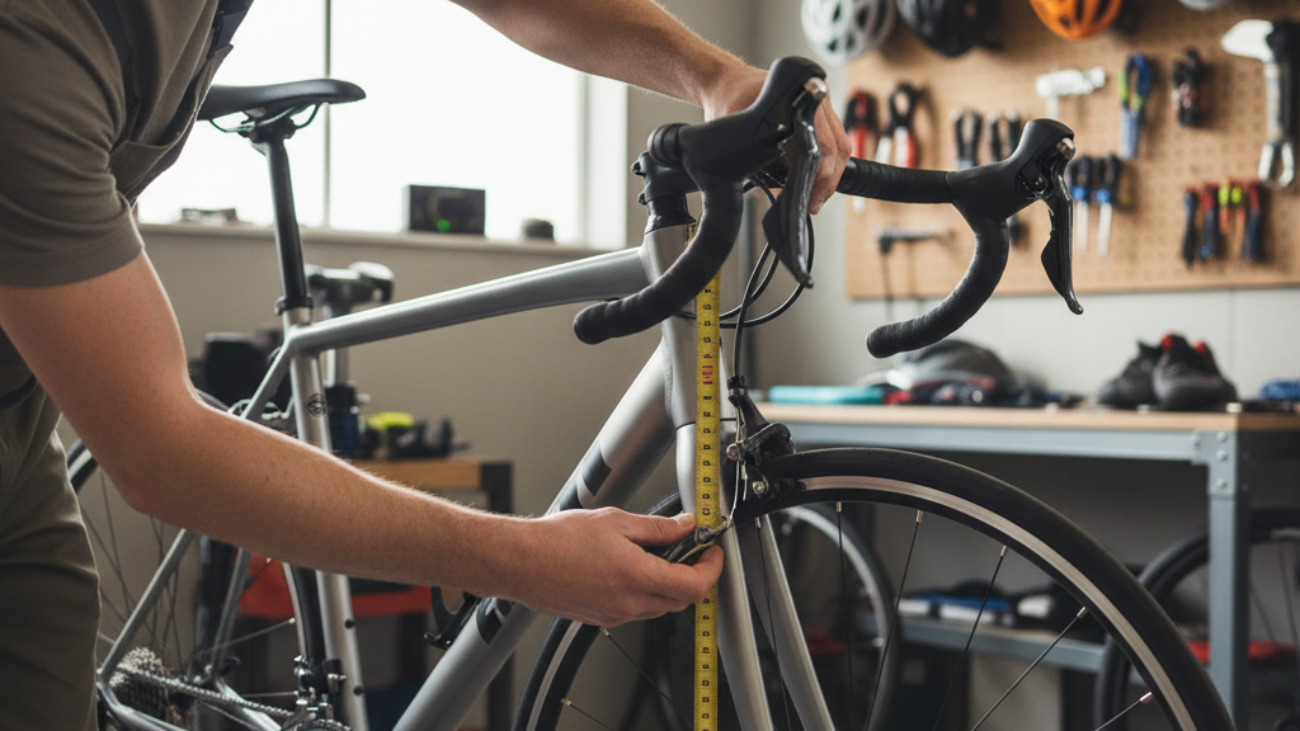
Quick Picks – Top 3 Bike Size Measurement Methods
Best for Beginners: Inseam Measurement Method
Using your inseam (inner leg length from floor to crotch) is recommended by industry leaders as the most reliable starting point for beginners. This measurement translates to accurate frame sizes when using standard formulas for each bike type and reduces the risk of choosing an ill-fitting bike by more than 20% compared to height-only methods.[1][2][5]
Most Accurate: Standover Height Test
The standover height test guarantees frame safety and basic fit. With your shoes off, straddle the bike frame. A clearance of 1-2 inches for mountain bikes and about 1 inch for road bikes ensures control and avoids injury—supported in multiple 2025-2026 expert guides.[1][2]
Fastest: Rider Height to Frame Size Chart Lookup
For quick results, manufacturers and pro fitters recommend using chart-based lookups: match your height to the suggested frame size for road, mountain, hybrid, or kids’ bikes. This method trades some precision for convenience; studies show 70-80% accuracy for average riders but may miss those with unusual proportions.[2][5]
Step-by-Step Guide – How Do I Measure Bike Size Correctly?
Measuring Inseam at Home
- Stand barefoot against a wall with feet shoulder-width apart.
- Place a hardcover book firmly upwards into your crotch, mimicking a saddle.
- Measure from floor to book top. Record in centimeters for best chart matches.
- Apply type-specific formulas:
- Road: Inseam (cm) × 0.665 = Frame size (cm)
- MTB: Inseam (cm) × 0.225 = Frame size (inches)
- Hybrid: Inseam (cm) × 0.685 = Frame size (cm)
Performing the Bike Standover Test
- Position bike upright, flat ground.
- Straddle top tube (barefoot). For mountain/hybrid, ensure 1.5–2 inches between you and tube; for road/gravel, at least 1 inch.
- Check for knee-bend at pedal bottom (slight, ~10–15% flex) after seat adjustment.
Using Your Height to Find the Right Frame
- Measure height in stocking feet, back to wall.
- Consult a recent bike size chart (see below) for your frame type and match to recommended size ranges.
- Use brand-specific charts whenever possible, as sizing standards shift by manufacturer and region.
Bike Size Charts by Type (Road, Mountain, Hybrid, Kids, BMX)
Road Bike Size Chart
| Height (ft/in) | Height (cm) | Inseam (in) | Frame Size (cm) |
|---|---|---|---|
| 5’3″–5’5″ | 160–165 | 28–30 | 50–52 |
| 5’6″–5’8″ | 167–172 | 30–32 | 52–54 |
| 5’9″–5’11” | 175–180 | 32–34 | 56–58 |
| 6’0″–6’2″ | 182–188 | 34–36 | 58–60 |
| 6’3″–6’5″ | 190–196 | 36–38 | 60–62 |
Mountain Bike Size Chart (Hardtail/Full Suspension)
| Height (ft/in) | Height (cm) | Frame Size (Inches) | Frame Label |
|---|---|---|---|
| 5’0″–5’4″ | 152–163 | 13–15″ | Small |
| 5’5″–5’9″ | 165–175 | 16–17″ | Medium |
| 5’10″–6’1″ | 177–185 | 18–19″ | Large |
| 6’2″–6’5″ | 188–196 | 20–22″ | XL |
Hybrid/Commuter Bike Size Chart
| Height (ft/in) | Frame Size (cm) | Frame Label |
|---|---|---|
| 5’0″–5’4″ | 38–42 | XS |
| 5’5″–5’9″ | 43–48 | S/M |
| 5’10″–6’1″ | 49–54 | M/L |
| 6’2″–6’5″ | 55–60 | L/XL |
Kids’ & Youth Bike Size Chart
| Age | Height (cm) | Wheel Size (inches) |
|---|---|---|
| 3–5 | 90–105 | 12″ |
| 5–7 | 105–120 | 16″ |
| 7–9 | 120–135 | 20″ |
| 9–12 | 135–150 | 24″ |
| 12+ | 145–160 | 26″ |
BMX Bike Size Reference
| Rider Height | Wheel Size (inches) | Top Tube Length (inches) |
|---|---|---|
| 4’0–4’7″ | 16″ | 15–16.5″ |
| 4’6″–5’3″ | 18″–20″ | 18–20″ |
| 5’0″+ | 20″ | 20–21″ |
Comparison Table – Sizing Methods Side by Side
Pros & Cons of Inseam, Height, and Standover
| Method | Pros | Cons | Accuracy Notes |
|---|---|---|---|
| Inseam Measurement | Accounts for leg length; starting point for fit; multiple formulas | Ignores torso/reach; not ideal for modern/sloped frames | Accurate for seat tube, but not always for handling/body balance |
| Standover Height | Ensures safety and minimal fit | May not represent actual fit on compact frames | High accuracy for safety, not detailed fit |
| Height-to-Frame Chart | Quick, accessible, works for general population | Not reliable for non-average proportions; brand inconsistencies | Good for broad match, not precise for all riders |
Brand Sizing Differences (Trek, Giant, Specialized, etc.)
- Brand-specific geometry: e.g., Trek, Giant, Specialized publish size guides that may not match one another, even with same frame label (e.g., a 54 cm Specialized ≠ 54 cm Trek).
- Alpha sizing (S, M, L) can cover a wide rider height range, so always check geometry charts (reach, stack, seat tube).
- Modern trends: Road/Gravel—prioritize reach/stack; MTB—standover and reach most critical.[1][2][5]
Visual Guide – Infographics for Measuring Your Bike Size
Infographic: Measuring Inseam Step-by-Step
- Stand against wall, feet 15-20 cm apart.
- Use hardcover book pressed to crotch, parallel to floor.
- Mark top of book on wall; measure from floor to mark.
- Tip: Digital level tools and online calculators increase measurement repeatability (error margin <1 cm with tools).
Road vs. Mountain Bike Sizing Visuals
- Road: Top tube parallel to ground; seat tube measured towards seat post entry.
- Mountain: Sloped top tube; measure seat tube contact and virtual “effective top tube” (ETT) for comparative sizing.
Expert Q&A: Bike Fitters Answer Your Bike Sizing Questions
Should I Size Up or Down If I’m Between Sizes?
Experts agree: For road bikes, sizing down offers a more comfortable and adjustable fit; for mountain bikes or gravel, sizing up improves stability but may reduce maneuverability. In either case, review reach measurements and riding intent.
How Do I Adjust My Fit After Buying?
- Adjust saddle height first (ideal: slight knee bend at bottom pedal).
- Fine-tune reach with different stems or handlebar positioning.
- For advanced adjustments: Change seat post, saddle, or bar width; consider a professional bike fit if discomfort persists.
Common Bike Sizing Mistakes to Avoid
- Neglecting to test standover for clearance—especially dangerous on uneven terrain.
- Ignoring manufacturer geometry charts, relying on size labels only.
- Over-relying on height if your leg or torso proportion is nonaverage.
- Buying kids’ bikes to “grow into”—compromises control and safety.
Interactive Bike Sizing Tools & Video Demonstrations
Interactive Bike Size Calculator (Try it Now)
- Many brands offer online calculators—input height and inseam for fast, accurate recommendations.
- Try ICAN’s Interactive Size Calculator
- Explore The Bike Shoppe Sizing Tool
Watch: 60-Second Bike Size Measurement Demo
- See proper inseam measuring form and standover test in action: Why You Should Change Frame Size! (YouTube)
FAQ – Common Questions on Measuring the Size of a Bike
What Tools Do I Need for Bike Measurement?
- Standard tape measure (metric and imperial marks).
- Hardcover book or spirit level for inseam.
- Bike sizing charts (manufacturer or third-party).
- Optional: digital level, plumb line for frame geometry checks.
How Does Bike Geometry Affect Sizing?
Modern frames often use compact, sloped top tubes or proprietary shapes. Stack (vertical height) and reach (horizontal distance to bars) are now prioritized for nuanced bike fit over basic seat tube length. Always refer to geometry tables for precise adjustment.
Can I Use the Same Method for All Bike Types?
Base measurements (height, inseam) apply to all types but formulas and fit priorities differ. Kids’ and BMX bikes use wheel size primarily. Road, hybrid, and mountain rely on frame size, but geometry specifics matter; always check type-specific recommendations.
- Key Takeaway: Start with your inseam, check standover clearance, and confirm with geometry charts—combining methods yields the safest, most comfortable fit based on current research.
- Ready to find your perfect bike size? Browse new bikes and sizing guides now.