
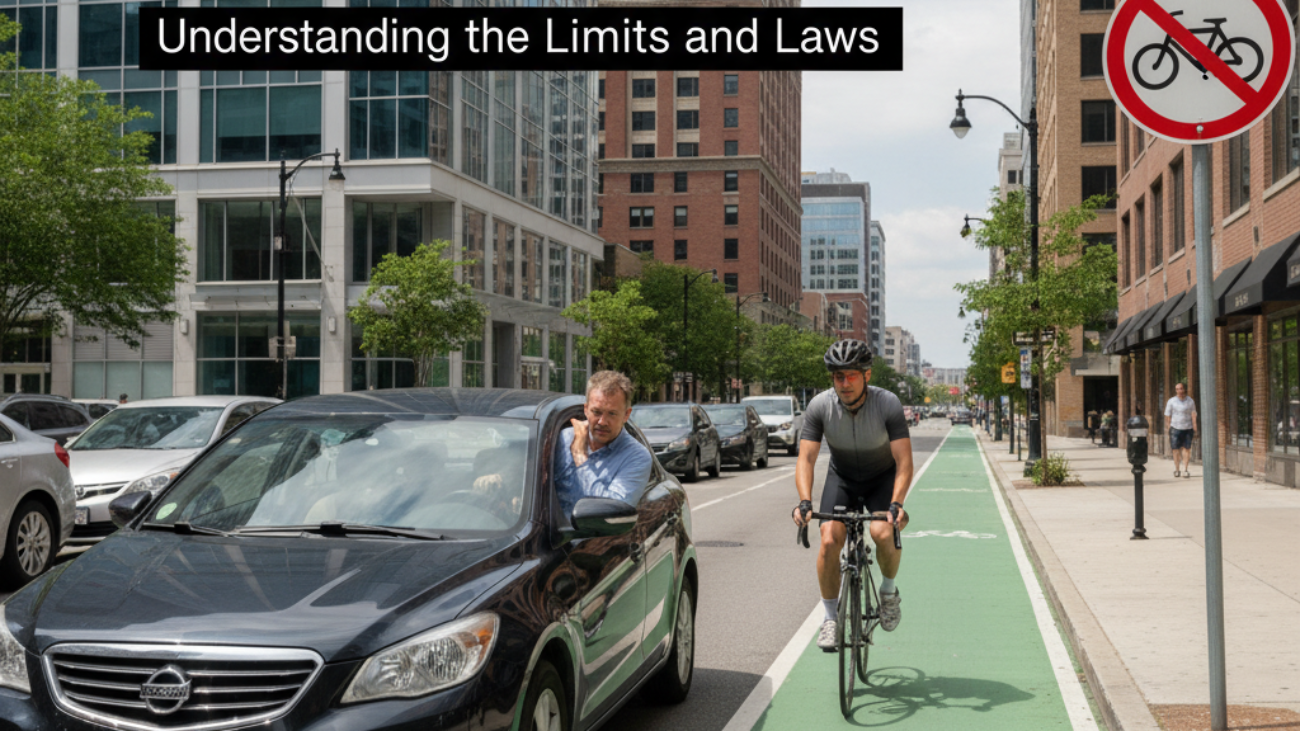
Quick Summary – Bicycle Lane Driving Laws at a Glance (2026 Edition)
What the Law Says – National Overview
There is no comprehensive federal law in the US that prohibits driving in bicycle lanes; regulations are state and city-based. While most states ban parking or prolonged driving in bike lanes, brief incursion is generally allowed for right turns, passing, or emergencies. No national legal minimum distance or time for motorist lane use exists.
Enforcement is increasingly automated with AI camera systems issuing tickets for violations. As of 2023, 1,166 cyclist fatalities occurred nationwide (up 4.4% from 2021), highlighting growing safety concerns. Fines for bike lane violations range from $30 to $250 depending on jurisdiction.
Typical Exceptions for Motorists
- Entering bike lanes briefly to make right turns
- Crossing bike lanes to enter/exit driveways or alleys
- Avoiding hazards or yielding to emergency vehicles
- No allowance for parking or standing in bike lanes
Top 10 States Where Motorists Can (and Cannot) Drive in Bicycle Lanes
California – Strict Lane Rules & Enforcement
California Vehicle Code §21209 strictly limits motorist entry: use bike lanes only for right turns, parking (where allowed), or entering/leaving a roadway. Enforcement relies on AI-equipped cameras and in-person patrols. In 2023, there were 145 cyclist fatalities (down 20.8% from the prior year). Routine safety operations cite unlawful right turns and failure to yield as common violations.
Texas – Right Turns and Special Cases
Texas generally prohibits motorists from driving in bike lanes, except when preparing for a right turn within 200 feet of an intersection or driveway. No state-specific enforcement data is available, but local ordinances (e.g., Austin, Houston) mirror the state approach.
Florida – Lane Usage for Turns Explained
Florida law allows motorists to enter a bike lane only when preparing for a turn or entering/exiting a driveway. Unlawful entry and blocking are penalized under city code; the typical minimum approach for right turns is within 100-200 feet.
New York – When Crossing is Allowed
Driving in a bike lane is forbidden except for turning, yielding to emergency vehicles, or avoiding hazards. New York City employs AI-based enforcement and issues automated fines up to $115 per violation. In 2025, bike lane response units issued thousands of citations using camera evidence.
Illinois – Unique Urban Guidelines
Chicago has aggressive automated enforcement, penalizing blockages and illegal parking with $150 fines. Motorists must only enter bike lanes to turn, cross, or yield. The city uses Hayden AI tech to identify violations.
North Carolina – State-Specific Statutes
Motorists may cross but not drive in a bike lane, except for turning or hazard avoidance. Speeding or encroachment in school or bike zones comes with doubled fines ($140–$500).
Oregon – Multimodal Lane Scenarios
Drivers must yield to bike lane users and may only enter for turns within the last 200 feet. Portland deploys video enforcement but focuses primarily on education.
Washington – Notable City-by-City Variations
Seattle and Washington State prohibit driving, standing, or parking in bike lanes except as allowed for right-turns and driveway access. Fines and enforcement are city-managed.
Massachusetts – Historic Legal Precedents
Motorists may briefly cross bike lanes for turning but cannot drive or park in them. Boston employs periodic safety operations and data-driven enforcement.
Virginia – Flexible but Regulated Access
State law allows briefly entering bike lanes for right turns, but cities like Arlington and Alexandria have stricter local ordinances and targeted policing of violations.
Exceptions: When Is It Legal to Drive in a Bike Lane?
Making Right Turns – Legal Minimum Distances
Most states permit motorists to merge into a bike lane only within 100–200 feet of the intended right turn. California’s “Three Feet for Safety Act” requires drivers to provide at least three feet of clearance to cyclists when passing, and full lane changes are now recommended if possible.
Entering or Leaving Roadways and Driveways
When entering or exiting a driveway, alley, or private road, drivers may cross (but not drive along) the bike lane. Drivers must yield to all cyclists before crossing and avoid blocking the lane.
Emergency Situations and Hazard Avoidance
Temporary entry into a bike lane is permitted to avoid road hazards, debris, or yield to authorized emergency vehicles, provided the maneuver is safe and necessary.
Parking, Loading, and Temporary Stops
Most states prohibit parking or stopping in bike lanes. Exceptions exist in rare cases for loading/unloading where explicitly posted. Automated enforcement technologies now detect illegal parking, and violators may face fines up to $250.
Common Violations Drivers Should Avoid in Bicycle Lanes
Encroachment Fines and Legal Penalties (2026)
Fines for encroaching, blocking, or parking in bike lanes typically range from $30 to $250. Repeat offenders can face higher penalties, double fines in school or work zones, and risk license points.
Real-world Scenarios and Mistakes
- Stopping for ride-share pickups in active bike lanes
- “Rolling” right turns without yielding to cyclists in the lane
- Driving the full length of a block in a bike lane to bypass congested traffic
- Failing to account for cyclists during night or low-visibility conditions
How Enforcement Has Changed in 2026
Many cities now employ automated AI camera systems that detect and ticket bike lane violations. Safety campaigns and education—supported by organizations like NACTO and local advocacy groups—target both drivers and cyclists for better compliance. Automated enforcement reduces the “invisibility” of infractions.
Visual Guide – Maps & Diagrams of Bike Lane Access by State
Color-coded State Laws Map (Downloadable)
Most states distinguish between total prohibition, right-turn exceptions, and loading/parking rules. Download the official state-by-state bike lane legality map from Pedestrian & Bicycle Information Center for detailed reference.
Sample Diagrams for Legal Maneuvers
Legal bike lane maneuvers include merging within specified distances for right turns, crossing for parking where posted, and yielding fully to cyclists. NACTO’s Urban Bikeway Design Guide provides standardized intersection diagrams and video tutorials.
Expert Tips for Safe Driving Near Bicycle Lanes
Sharing the Road – Best Practices for Drivers
- Change lanes completely to pass cyclists if possible
- Maintain a minimum of three feet clearance, more if possible
- Reduce speed in bike lane areas and intersections
- Avoid distractions and check blind spots for cyclists
Communicating with Cyclists
- Use signals early to indicate turns or lane changes
- Make eye contact or use gestures if needed in ambiguous situations
- Yield at driveways and crosswalks; always assume a cyclist has the right of way when in a bike lane
Preventing the Most Common Accidents
- Be alert at intersections (over 50% of bike crashes occur here)
- Watch for cyclists during low visibility conditions—night, rain, or fog
- Obey right-turn-on-red restrictions near protected intersections
- Avoid “dooring” by checking mirrors before opening car doors along bike lanes
What’s New? 2026 Bicycle Lane Law Updates & Upcoming Changes
Recent State Law Amendments
2026 focus is on enhancing cyclist visibility (new lighting requirements), expanded use of automated enforcement, and increased fines for repeat or dangerous violations. California and New York remain at the forefront of both infrastructure and enforcement innovation.
Pending Legislation to Watch
- State-level proposals for fully separated “Class IV” bike lanes
- Legislative pushes for universal three feet+ passing laws
- Further expansion of camera-based enforcement systems nationwide
- Increased penalties for hazardous driving in proximity to bike lanes, especially in Vision Zero cities
FAQ: Most Asked Questions About Driving in Bicycle Lanes
- Can I ever drive the full length of a block in a bike lane?
No. Only enter briefly for turning, crossing, or emergencies—never cruise along a bike lane. - How much clearance do I need when passing cyclists?
Most experts recommend at least three feet, and some state laws (CA, WA) mandate it. - What are the most common penalties?
Typical fines range from $30 to $250, and repeated or egregious offenses can lead to higher penalties. - Where do I find my state’s specific rules?
See the resource links below for official state codes and recent updates.
Resources & Further Reading
Official State Law Links
- California MUTCD – Section 9E: Bicycle Lanes (2026)
- NYC DOT: Bike Laws
- Pedestrian & Bicycle Information Center – State Law List
Guidebooks, Advocacy Groups, and Safety Campaigns
- Go Safely California – Share the Road
- NACTO Urban Bikeway Design Guide
- California Bicycle Coalition (CalBike)
- Santa Monica Police Safety Campaigns
- PeopleForBikes
Download maps, state law charts, and get updates on the latest legislation from these official and advocacy sources to stay compliant and ensure safe sharing of the road in 2026 and beyond.