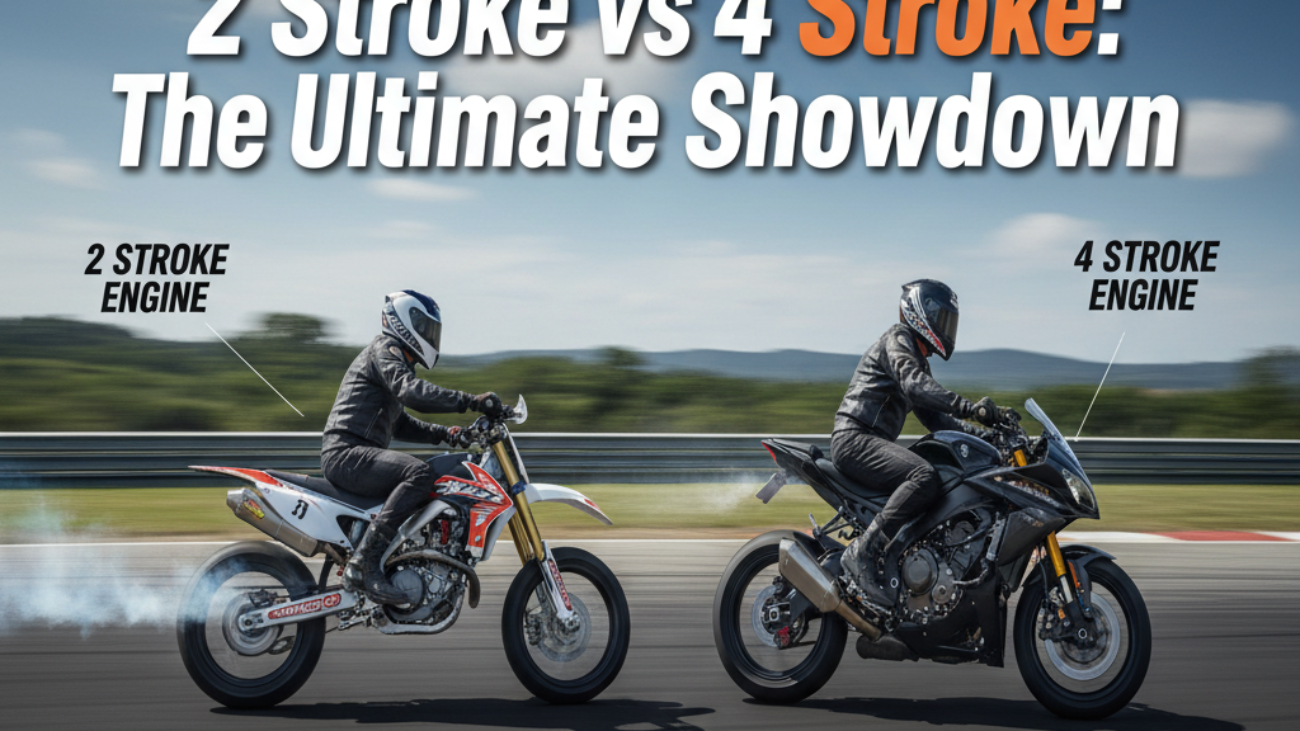
2 Stroke vs 4 Stroke Bike – Quick Overview
What is a 2 Stroke Bike?
A 2 stroke bike uses an engine that completes a full power cycle with just two movements of the piston. These bikes are known for their lightweight design, rapid throttle response, and strong power-to-weight ratio. They traditionally excel in off-road and motocross racing.
What is a 4 Stroke Bike?
A 4 stroke bike has an engine that completes a power cycle in four piston movements. These bikes offer smoother power delivery, greater fuel efficiency, and often require less frequent refueling. They dominate road racing, trail riding, and heavy-duty use cases.
Key Differences at a Glance
| Feature | 2 Stroke Bike | 4 Stroke Bike |
|---|---|---|
| Engine Cycle | 2 strokes | 4 strokes |
| Power Band | Sudden, peaky | Smoother, broader |
| Weight | Lighter | Heavier |
| Maintenance | Frequent, simple | Less frequent, complex |
| Cost | Lower upfront | Higher upfront |
| Emissions | Higher (historically) | Lower |
Engine Technology & Power Delivery Explained
How 2 Stroke Engines Work in 2026
Modern 2 stroke engines use advanced oil injection and improved combustion chambers to reduce emissions. Electronic exhaust valves and digital ignition now provide more controlled power, reducing the traditional “hit” of older 2T bikes while retaining fast response.
Modern 4 Stroke Engine Innovations
Recent 4 stroke bikes feature lighter components, variable valve timing, and titanium valves for high RPM endurance. These advancements give consistent power with increased reliability and efficiency, making 4Ts suitable for both pros and daily riders.
Electronic Fuel Injection (EFI) and Hybrid Trends
Both 2 stroke and 4 stroke bikes in 2026 benefit from electronic fuel injection (EFI), ensuring better fuel delivery and smoother performance at different altitudes. The rise of hybrid-assist systems also enhances torque and efficiency in select models.
Performance Showdown: 2 Stroke vs 4 Stroke Bike on the Trail
Acceleration, Top Speed, and Power Bands
2 stroke bikes excel in instant acceleration thanks to their nimble design and quick-revving engines. Top speeds now rival those of modern 4 stroke bikes, which offer predictable and linear power, making them ideal for long sprints and sustained high speeds.
Agility, Handling, and Riding Scenarios
Lighter 2T bikes turn sharply and handle tight trails with ease, favored in technical enduro and motocross. 4T bikes, with better front-end feel and planted stability, dominate open tracks and are forgiving for new riders and longer adventures.
Terrain Suitability: Which Bike Wins Where?
- Technical Trails: 2 Stroke
- Open Tracks: 4 Stroke
- Urban/Commuting: 4 Stroke
- Aggressive Racing: Even, depends on rider preference
Maintenance, Reliability, and Ownership Costs in 2026
Routine Maintenance Needs for Each Engine Type
2 stroke bikes require frequent, simple maintenance: top-end replacements, oil changes, and air filter checks. 4 stroke bikes need valve adjustments, oil changes, and less-frequent but more complex engine work.
Long-Term Durability and Repair Costs
With modern materials, 4 stroke bikes last longer between rebuilds but cost more to repair. Average 4T engine rebuild: $800–$1,200. 2T top-end rebuild: $250–$400, but required more often depending on usage.
Total Cost of Ownership: 2 Stroke vs 4 Stroke
| Aspect | 2 Stroke | 4 Stroke |
|---|---|---|
| Initial Cost | Lower | Higher |
| Annual Maintenance | $350–$700 | $500–$1,000 |
| Average Lifespan | ~150 engine hours | ~250 engine hours |
| Total 5-Year Cost | $4,500–$7,000 | $6,000–$10,000 |
Environmental Impact & Regulatory Trends
2026 Emissions Standards: What’s Changed?
Current regulations demand major cuts in particulate emissions. Manufacturers equip both 2T and 4T models with advanced catalytic converters and closed-loop EFI, closing the emissions gap between the two designs.
The Push for Electrification and Its Effect on 2T/4T Bikes
Electric models are now a growing segment, especially for urban commuting. While electrification pressures legacy combustion bike sales, most major brands still invest in cleaner 2T and 4T tech for enthusiasts.
Eco-Friendly Technologies in Modern Bikes
- Low-friction materials for less fuel use
- Biodegradable lubricants in 2T oil injection
- Hybrid-assist for low-speed efficiency
Rider Perspectives: Who Should Choose 2 Stroke or 4 Stroke?
Beginner, Weekend Warrior, or Pro – Matching Bike to Demographics
- Beginners: 4 Stroke, for easy learning
- Weekend Trail Riders: 2 Stroke for spirited fun on technical terrain
- Pros: Choose based on track and personal style
Rider Testimonials and Expert Opinions
“My 2 stroke is unbeatable on tight woods trails – rapid response helps me dodge obstacles.” (Enduro rider, USA)
“I switched to a 4 stroke for longer races. It’s more stable, less tiring on the long haul.” (Rally competitor, Australia)
Interactive Scenario-Based Decision Tool
Ask yourself: Do you prefer instant acceleration and low weight (choose a 2 stroke)? Or smoother, consistent power and less frequent maintenance (choose a 4 stroke)?
Frequently Asked Questions: 2 Stroke vs 4 Stroke Bike (2026)
- Which is more reliable for long-term ownership?
- Are emissions a major concern for 2 stroke bikes now?
- Can I commute daily on a 2 stroke motorcycle?
- Which bike holds value longer?
- Is insurance more expensive for one type?
Final Take: Choosing the Right Bike for Your Riding Future
In 2026, both 2 stroke and 4 stroke bikes are more advanced, reliable, and eco-friendly than ever. Your choice should depend on riding style, terrain, and budget. For technical or short aggressive rides, a 2T shines. For longer, smoother journeys and less-frequent upkeep, a modern 4T is ideal.
Ready to choose your next ride? Compare top 2 stroke and 4 stroke bikes now and find the perfect fit for your riding future!