Why Correct Bike Size Matters in 2026
Comfort, Safety, and Performance Benefits
Choosing the right size bike is crucial. A correctly sized bike means better comfort, easier control, and increased performance. Whether you ride short distances or long routes, the right size keeps you comfortable and safe on every ride.
Risks of Wrong Sizing (Injury, Inefficiency)
An incorrectly sized bike can cause pain, injuries, or long-term health problems. Riding the wrong size may also make cycling harder and less fun, causing knee pain, backaches, or even accidents.
Online Shopping vs In-Store Fitting: What’s Changed?
Today, most bikes are bought online. While in-store fitting lets experts help you, online shopping requires you to measure at home. This guide teaches you how to measure like a pro, using 2026’s latest tools and resources.
Essential Tools and Preparation for Measuring a Bike
Tools You’ll Need at Home
- Measuring tape (metric and inches)
- Hardcover book or ruler
- Pencil and paper or phone for notes
- Calculator (optional)
Pro Tips Before You Start Measuring
- Wear cycling shorts or tight clothing for precise measurements.
- Measure against a wall for stability.
- Double-check each measurement for accuracy.
- Ask a friend for help with tricky steps.
Step-by-Step Guide: Measuring Your Body for Bike Sizing
How to Measure Your Inseam (With Visual Diagrams & Video)
- Stand barefoot with your back against a wall and legs about 15-20 cm apart.
- Place a hardcover book between your legs, spine up, as high as comfortable (like sitting on a seat).
- Hold the book in place and mark where the top touches the wall.
- Measure from the floor to your mark. This is your inseam length.
- Record this measurement.
(See printed diagrams and video walkthrough in “Visual Guide” section below.)
Additional Measurements (Torso, Arm Length)
- For torso: Sit straight and measure from your crotch to the notch just below your neck at the throat.
- For arms: Hold one arm out and measure from your collarbone to your wrist bone.
- Record these numbers; some calculators use them for precision sizing.
Printable and Interactive Sizing Worksheet
Download our sizing worksheet or fill one in online to stay organized. (See “Visual Guide” for link.)
Step-by-Step Guide: Measuring a Bike Frame
The Center-to-Top (C-T) and Center-to-Center (C-C) Methods Explained
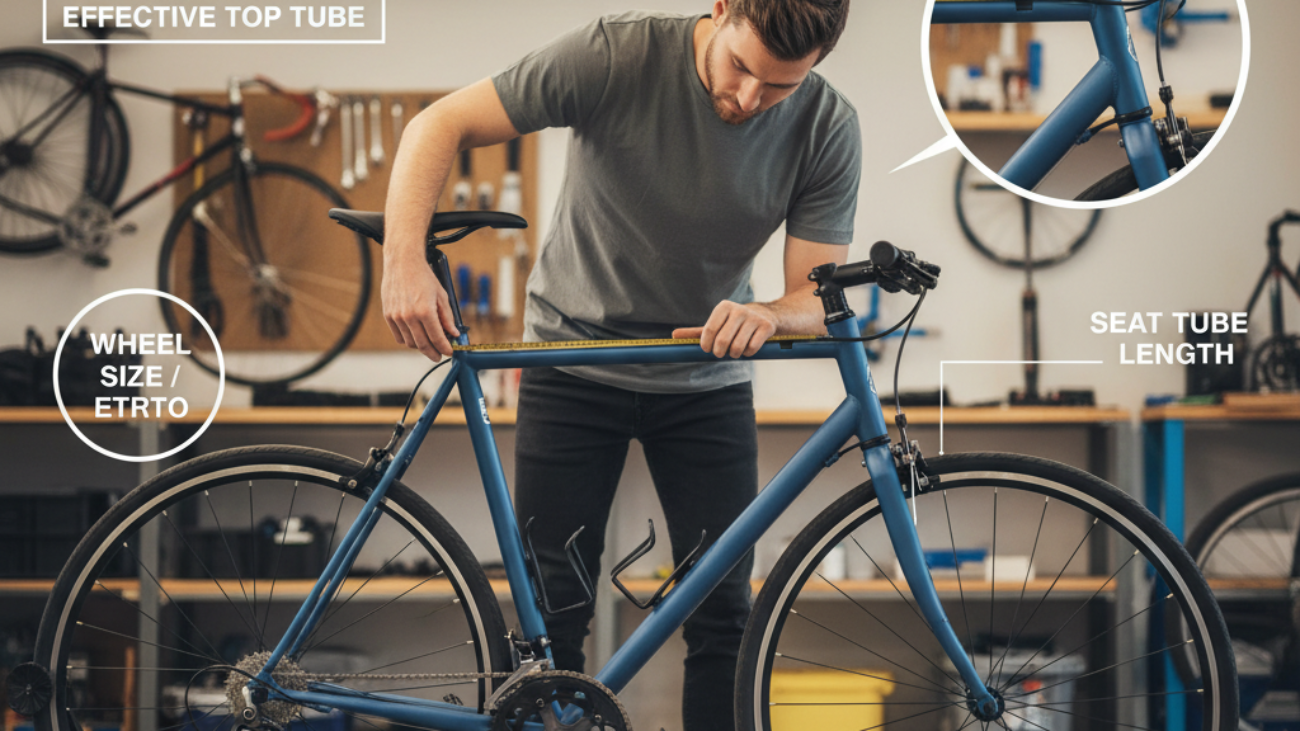
- C-T: Measure from the center of the bottom bracket (the bolt in the crank) to the top of the seat tube.
- C-C: Measure from the center of the bottom bracket to the center of the top tube where it meets the seat tube.
- Note the number in centimeters or inches as listed on most bike charts.
Measuring for Different Bike Types (Road, Mountain, Hybrid, Folding, Step-Through)
- Road bikes: Usually measured by the seat tube (C-T or C-C in cm).
- Mountain bikes: Also by seat tube but sometimes listed in inches.
- Hybrids: Measures similar to road bikes, sometimes labeled S/M/L.
- Folding/step-through: May have unique systems—refer to the manufacturer’s geometry specs for these models.
Interpreting Manufacturer Geometry Charts (Stack, Reach, Standover)
- Stack: Height from the bottom bracket to the top of the frame at the head tube.
- Reach: Distance from the bottom bracket to the headset’s center. Key for fit and comfort.
- Standover: The height from the ground to the top tube. You should have 2-5 cm clearance.
Troubleshooting: What If Something Doesn’t Line Up?
- If numbers seem off, double-check original measurements, or try both C-T and C-C methods.
- If in doubt, compare with bike geometry charts or ask seller/manufacturer for help.
Bike Size Charts & Fit Calculators (2026 Updated)
Universal Height vs. Frame Size Tables
| Rider Height (cm) | Inseam (cm) | Road Bike | MTB (in) | Hybrid |
|---|---|---|---|---|
| 150-160 | 65-70 | 48-51 cm | 13-15″ | 14-15″ |
| 160-170 | 70-78 | 52-54 cm | 15-17″ | 16-17″ |
| 170-180 | 78-83 | 54-56 cm | 17-19″ | 18-19″ |
| 180-190 | 83-90 | 56-59 cm | 19-21″ | 20-21″ |
Type-Specific Size Formulas (MTB, Road, Gravel, Electric)
- Road: Inseam (cm) x 0.67 = frame size (cm)
- MTB: Inseam (cm) x 0.66 = frame size (cm), or check with inches on charts
- Gravel/electric: Follow manufacturer’s guide since sizing can vary
Interactive Bike Size Calculator (Link or Embed)
Try the 2026 interactive calculator on top cycling sites or linked in the resource section.
Special Fit Considerations: Unique Riders & Frames
Kids’ Bikes: How Sizing Differs and What to Watch For
- Kids’ bikes use wheel sizes (12″, 16″, 20″, 24″) instead of frame sizes.
- Measure the child’s inseam and match to the right wheel size.
- Ensure your child can touch the ground easily while seated.
Women’s, Petite, and Tall Cyclists: Adapting the Process
- Some bikes are designed with shorter top tubes for petite riders or women.
- Tall riders may need extra-large frames or longer stems—always check standover and reach.
Adaptive and Nonstandard Bikes (Folding, Recumbent, Step-Through)
- Always verify sizing with the manufacturer’s charts.
- Test ride if possible or use adjustable models for unique body types or abilities.
Sizing Your Bike for Online Purchases in 2026
How to Double-Check if a Bike Will Fit When You Can’t Test Ride
- Match your inseam and height to the seller’s size chart.
- Compare your current bike’s key measurements to new options.
- Ask for exact geometry specs, not just S/M/L labels.
Virtual Fitting Tools & What to Trust
Use trusted brand sizing tools or leading apps. Upload your measurements for instant recommendations.
Return/Exchange Tips for Online Bike Buyers
- Review return policies before you buy.
- Keep all packaging in case you need an exchange.
- Take photos of your measuring process to support any fit claim.
Visual Guide: Diagrams, Videos, and Checklists
Annotated Bike Measurement Diagrams
See attached diagrams with labels for all key points (inseam, frame, stack, reach, standover).
Step-by-Step Video Walkthrough (2026)
Watch the latest video tutorial for real-life measurement demonstrations. (See resource section.)
Printable PDF/Downloadable Sizing Checklist
Printable checklist available—tick off each step so nothing is missed.
Troubleshooting & FAQs: Common Measurement Problems Solved
What If My Measurements Don’t Match Any Chart?
- Try the next closest size or consult brand help desks.
- Look for adjustable seatposts and stems for minor changes.
How to Measure Used or Unlabeled Frames
- Use the center-to-top or center-to-center measuring method.
- Compare with sizing tables above.
Addressing Discrepancies Between Brands or Bike Types
- Frame sizing might differ—always check geometry charts, not just frame size numbers.
- Email the company for specific comparison help.
Other Common Sizing Questions
- Can I ride a frame one size up or down? Sometimes, but adjustments may be needed.
- Are women’s frames different? Some are shaped for shorter torsos; check the geometry.
- How tight should the fit feel? You should reach the pedals comfortably and brake safely.
Further Resources and Next Steps for the Perfect Fit
Where to Get a Professional Bike Fitting in 2026
Most cities have pro fitting studios—search local bike shops or sports centers for certified fitters.
Online Communities and Sizing Tools
Join forums or follow platforms like BikeFit, Reddit/r/bicycling, and use their sizing calculators for more help.
Recommended Accessories for a Tailored Fit
- Adjustable stems and seatposts
- Comfort saddles
- Fit wedges for cleats and shoes
Getting the right bike size is the foundation for an enjoyable riding experience in 2026. Use the steps above, double-check your numbers, and keep learning with resources and community support to ensure your perfect bike fit!