Quick Overview – Why Proper Brake Adjustment Matters
Safety and Performance Benefits
Proper brake adjustment is essential for every cyclist. A well-calibrated braking system shortens stopping distances, increases control, and reduces accident risks. Tests show that using both front and rear brakes together can reduce stopping distance by up to 35% compared to the rear brake alone. For example, at 31 mph (50 km/h), engaging both brakes leads to a stopping distance of approximately 24.75 m, while using rear brakes only can go up to 39.91 m.[1][2][3]
Consistent adjustment keeps performance predictable and reliable, especially in emergencies or wet, muddy, and steep terrains.
Signs Your Bike Brakes Need Adjusting
- Levers pull too close to the handlebar or feel spongy
- Brakes rub on the rim or rotor when released
- Unusual noise, such as squealing, grinding, or vibration
- Pads appear unevenly worn or touch the tire
- Noticeable decrease in stopping power
Top 5 Essential Tools for Adjusting Bicycle Brakes
Multi-Tool for Cyclists
Compact multi-tools include essential hex keys and screwdrivers, allowing on-the-go adjustments. They’re ideal for quick cable tension tweaks or emergency fixes on rides.
Allen Wrench Set
Most bicycle brake components use 4 mm, 5 mm, or 6 mm Allen bolts. A quality wrench set ensures precise torque when adjusting calipers, pads, or levers.
Cable Puller or 4th Hand Tool
This tool allows for secure, one-handed cable tensioning without stretching or damaging the cable. It is key during initial cable setup and tension correction.
Needle-Nose Pliers
Used for holding cables tight, trimming frayed ends, and pinching end caps after installation. Essential for smooth cable routing and clean installations.
Bike Stand (Optional, but Recommended)
A bike stand holds your ride steady, making brake adjustments easier and more accurate. While optional, it ensures both hands remain free for precise work and testing.
Step-by-Step Guide – How Do You Adjust Brakes on a Bicycle
Preparing Your Bike and Workspace
- Secure your bike in a stand or stable upright position.
- Gather necessary tools (see above).
- Ensure the area is well-lit and free of distractions.
Inspecting Brake Pads and Cables
- Check brake pads for wear: Replace rim pads if <1/8 inch or disc pads if <1 mm thick.
- Look for glazing, contamination (oil/dirt), or misalignment.
- Inspect cables for fraying, kinks, or corrosion. Replace if damaged.
Centering the Brake Calipers
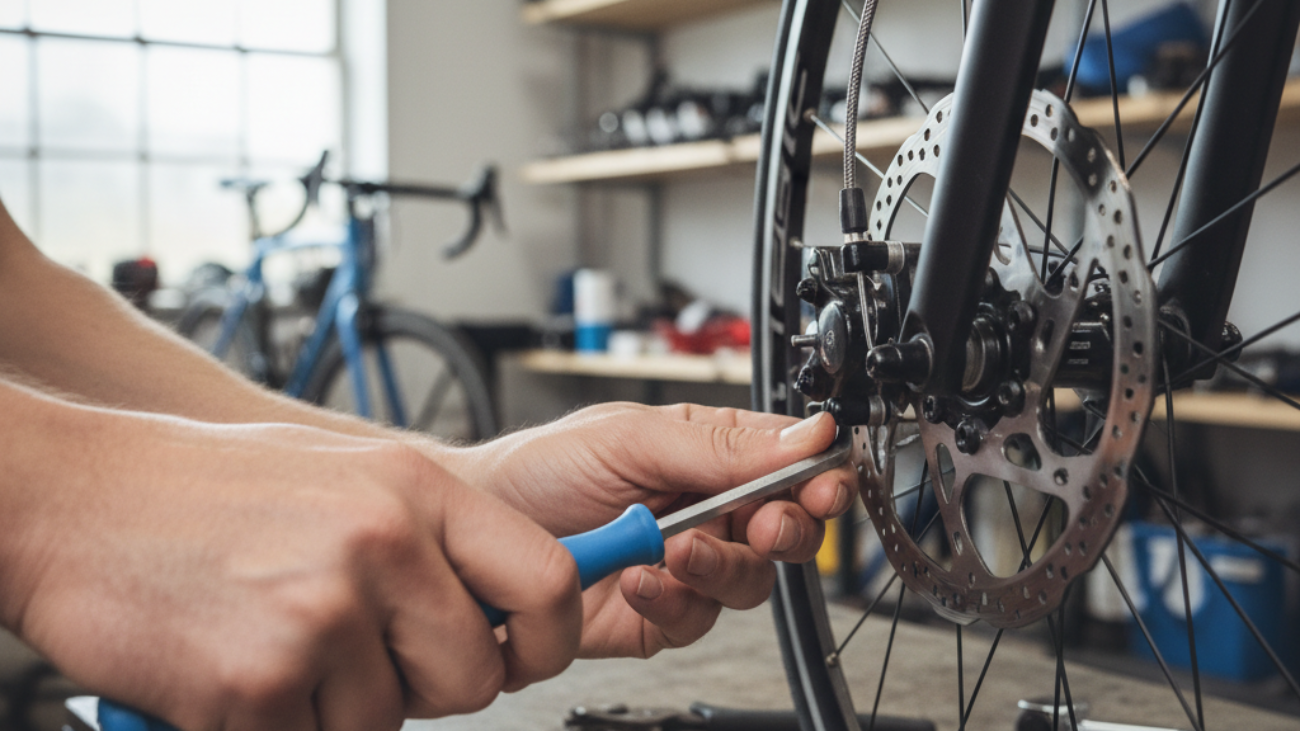
- Loosen mounting bolts with an Allen wrench.
- Center calipers over rim or rotor. For rim brakes, ensure equal pad clearance on both sides. For disc brakes, align the caliper by squeezing the brake lever while tightening bolts (usually 6–8 Nm).
Adjusting Brake Pad Alignment
- Align rim brake pads so they fully meet the rim surface (not the tire).
- Set toe-in: The pad’s leading edge should contact the rim 0.5–1 mm before the rear.
- Disc brake pads should be equally spaced and parallel to the rotor (<0.5 mm gap).
Fine-Tuning with the Barrel Adjuster
- Turn the barrel adjuster to tighten (counterclockwise) or loosen (clockwise) the cable, aiming for minimal lever travel before pads engage.
- For hydraulic discs, use the lever adjustment dial for fine-tuning. Bleed the system if the lever still feels spongy.
Testing Brake Lever Feel and Stopping Power
- Squeeze the lever: It should engage brakes about halfway through the pull.
- Spin the wheels—ensure there’s no rubbing when the brakes are released.
- Test stopping distance at moderate speed (target 10–15 meters from 25 km/h under dry conditions). Adjust further as needed.
Top 7 Common Mistakes When Adjusting Bike Brakes
Misaligning Brake Pads
Pads touching the tire or hanging off the rim dramatically reduce braking effectiveness and increase blowout risks.
Over-tightening Brake Cables
Leads to constant pad contact, excess drag, or difficulty modulating stops. Research shows this can increase wear rates by over 20%.
Ignoring Cable Wear or Fraying
Worn or frayed cables can lead to sudden brake failure. Replace cables at the first sign of damage for maximum safety.
Forgetting to Check Wheel Trueness
Wobbly rims or rotors result in intermittent pad contact, causing wear and inconsistent braking. Always true the wheel before adjusting brakes.
Skipping Lubrication of Moving Parts
Dry, gritty pivots impede caliper return. Use bike-specific lubricant sparingly on moving joints and cable housings.
Incorrect Use of Adjustment Barrels
Too much tension or slack leads to slow response or brake drag, respectively. Aim for immediate, firm engagement without excessive lever travel.
Neglecting Test Rides After Adjustment
Always validate adjustments in a safe, controlled area. Real-world riding exposes subtle issues not obvious on the workstand.
Troubleshooting: Solutions to the Most Frequent Brake Adjustment Problems
Squeaky Brakes
- Clean pads and rim/rotor with isopropyl alcohol or a dedicated cleaner.
- For rim brakes, ensure slight toe-in of pads. For discs, check for contamination or glazed pads—replace if needed.
Brakes Rubbing on the Rim or Rotor
- Recenter calipers and ensure the wheel is properly seated.
- Check for rotor/rim bends and true if needed.
- Adjust pad position to maintain even clearance (target 0.3–0.5 mm).
Spongy or Soft Brake Lever Feel
- Tighten cable (rim/mechanical disc) or bleed system (hydraulic disc).
- Inspect fluid level and replace pads if worn.
Persistent Poor Stopping Power
- Replace contaminated, glazed, or thin pads.
- Clean braking surfaces and check for oil residue.
- Review alignment and tension—poor engagement often traces back to these fundamentals.
When to Replace, Not Adjust: Red Flags to Watch For
Worn-Out Brake Pads
Replace rim pads if less than 1/8 inch remains; disc pads if below 1 mm or they appear glazed or contaminated—even if visually thick.
Severely Frayed Cables
Do not ride with exposed strands or kinks; immediate replacement is critical to prevent sudden loss of braking.
Damaged or Bent Brake Calipers
Visible bends, cracks, or corrosion can cause unpredictable braking or complete failure. Upgrade to new, reliable parts promptly.
Expert Tips for Long-Lasting, Reliable Bike Brakes
Regular Maintenance Schedule
- Inspect pads and cables weekly for wear.
- Adjust cable/hydraulic tension monthly.
- Clean rota, rim, and pad surfaces weekly with designated cleaner.
- Bleed hydraulic systems annually, or more often if soft-feeling levers persist.
Checking Brake Wear Indicators
- Look for grooves or wear lines molded into pads.
- Replace pads once indicators are no longer visible.
Seasonal Adjustment Tips (Rain, Heat, Mud)
- Wet or muddy conditions increase stopping distance by up to 50%—periodically bed-in new pads and use softer compounds for better bite.
- Heat from long descents can cause fade; alternate brakes to prevent overheating rotors (avoid exceeding 150°C).
- After wet or dirty rides, wipe down pads and rotors/rims thoroughly.
FAQ: How Do You Adjust Brakes on a Bicycle?
- How often should I check my brakes? Weekly for wear, monthly for tension; before every big ride.
- Why do my brakes feel weak after rain? Pads and rotors/rims may be contaminated or wet; clean and dry thoroughly before riding.
- What’s the ideal lever feel? Firm engagement halfway through the pull, with minimal free play at the tip.
- How do I know when to bleed hydraulic brakes? If the lever feels soft or pulls close to the grip, bleed the system, ideally once a year.
- Can I use WD-40 or generic oil on my brakes? Never—use only bike-specific lubricants and never on pads or rotors/rims.
Further Learning & Resources for DIY Bike Maintenance
- REI Bike Maintenance Guide
- BikeRadar Brake Bleeding and Adjustment Guide
- Park Tool Repair Help
- GTW Bike Brake Parts and Tools
Regular brake checks save lives and ensure a smoother, more reliable ride. For premium tools and pads, see our recommended selection and keep your stopping power at peak performance.
Ready to take control of your bike’s safety? Start your brake adjustment routine today!