Quick Overview – Bicycle Brake Adjustment Essentials in 2024
Why Proper Brake Adjustment Matters for Safety and Performance
Bicycle brakes are your ride’s main safety system. Proper brake adjustment stops your bike quickly and keeps you in control. Well-set brakes also reduce wear on your bike parts, make riding smoother, and help you avoid crashes. Regular brake check-ups can prevent sudden failures and improve how your bike feels.
Tools and Materials Checklist for DIY Brake Tweaks
- Allen wrenches (usually 4mm, 5mm, or 6mm)
- Bicycle tire levers
- Phillips and flathead screwdrivers
- Cable cutters
- Needle-nose pliers
- Bike lubricant or grease
- Clean cloth or paper towels
- Spare brake pads (if old ones are worn)
- Torch or flashlight for clear vision
- Zip ties (for cable management)
- Hydraulic fluid or bleed kit (for hydraulic brakes)
Understanding Bicycle Brake Types and 2024 Technology Updates
Overview of Rim Brakes (V-brake and Caliper)
Rim brakes use pads that clamp onto the wheel rim. V-brakes are common on mountain and hybrid bikes. Caliper brakes are popular on road bikes. Both are easy to adjust, lightweight, and simple to inspect.
Disc Brakes: Mechanical vs. Hydraulic—What’s New?
Disc brakes have pads that grip a metal rotor at the wheel hub. Mechanical disc brakes use a cable, while hydraulic disc brakes use fluid. Hydraulics offer stronger, smoother stopping. In 2024, both types are lighter, easier to maintain, and more common even on city and e-bikes.
Advances in E-Bike and Electronic Brake Systems
Modern e-bikes often use disc brakes with electronic sensors for auto-cutoff. Some bikes have electronic brake levers that adjust force digitally. These systems boost safety, but adjustments need careful attention to sensors and software.
Preparation – Pre-Adjustment Inspection Steps
Wheel and Tire Alignment Checks
- Spin each wheel. Watch if it wobbles side to side.
- If it wobbles, the wheel needs truing by a mechanic before you adjust the brake.
- Check that tires are fully inflated and seated evenly on the rim.
Brake Pad Wear and Placement Analysis
- Look at each brake pad. Pads should be at least 3mm thick, with even wear.
- If a pad is worn unevenly or too thin, replace it before adjusting brakes.
- Check pad position—pads must touch the rim or rotor flatly, not the tire or miss the braking surface.
Cable, Hose, and Lever Condition Review
- Squeeze each brake lever. It should move smoothly and not touch the handlebar.
- Inspect brake cables or hydraulic hoses for cracks, frays, or leaks.
- If cables are rusty or hoses leak, replace them before adjustment.
How to Adjust Rim Brakes (V-Brake and Caliper) Step-by-Step
1. Aligning Brake Pads and Rim Clearance
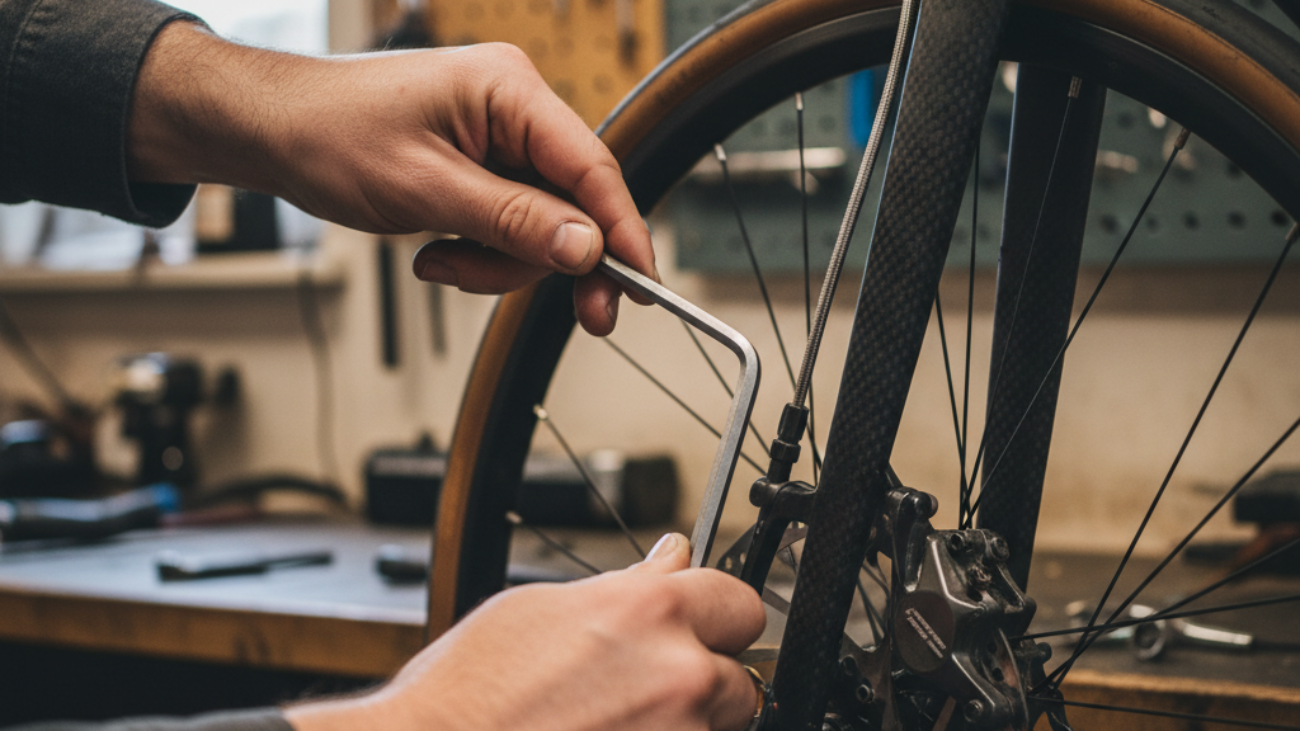
- Loosen the pad bolt with the correct Allen wrench.
- Line up the pad so it’s level with the rim and not touching the tire.
- Tighten the bolt while holding the pad in place.
- Adjust pads on both sides so they point straight at the rim.
- Make sure there is 1–2 mm gap between each pad and the rim.
2. Setting Cable Tension and Testing Lever Feel
- Loosen the cable anchor bolt on the brake arm.
- Pull the cable with pliers until the brake pads sit close to the rim.
- Tighten the anchor bolt securely.
- Squeeze the brake lever. The pads should grip before the lever touches the bar.
- If lever travel feels loose, turn the barrel adjuster out to increase tension. Turn it in to loosen if too tight.
3. Fine-Tuning for Squeak-Free, Even Braking
- Check pad and rim alignment again.
- If brakes squeak, “toe in” the pad by moving the front edge slightly closer to the rim.
- Place a business card behind the pad’s back edge, then tighten.
- Test by spinning the wheel and braking. Adjust as needed for even, silent operation.
How to Adjust Disc Brakes (Mechanical & Hydraulic)
1. Mechanical Disc Brake Adjustments (Caliper and Cable)
- Loosen the caliper mounting bolts.
- Squeeze the brake lever firmly to center the caliper over the rotor.
- While holding the lever, tighten the mounting bolts evenly.
- If lever pull is loose or the brake feels weak, turn the barrel adjuster for more tension.
- Check that the rotor spins without rubbing the pads. Adjust caliper position if necessary.
2. Hydraulic Disc Brake Adjustments (Lever Bleed, Caliper Position)
- Test lever feel; if soft or spongy, your brake may need bleeding.
- Follow your brake manufacturer’s bleeding process with a proper bleed kit.
- To fix pad rub, loosen caliper bolts, squeeze the lever, and retighten bolts to center the caliper.
- Do not touch the rotor with bare hands—oil can affect braking.
3. Advanced Troubleshooting: Warped Rotors & Pad Bedding
- If the rotor is bent, gently straighten it with a rotor truing tool.
- If new pads feel weak, “bed them in” by braking repeatedly at moderate speed until performance improves.
Adjusting E-Bike and Electronic Brake Systems (2024 Update)
1. Common E-Bike Brake Challenges and Fixes
- E-bikes are heavier, so brake pads can wear faster.
- Check pad thickness and rotor condition weekly.
- Inspect sensor wires near the brake for damage or loose plugs.
- If brake cutoff doesn’t work, reboot the system or reconnect the sensor.
2. Electronic and Sensor-Based Brake Adjustments
- Consult your bike’s manual for software updates or diagnostics.
- Test if electronic sensors cut motor power when brakes are squeezed.
- Calibrate brake force in the settings if available. Reset sensors if needed for accuracy.
Troubleshooting Common Brake Issues in 2024
Squeaky or Weak Brakes—Causes and Fixes
- Wipe rims or rotors with clean alcohol wipes. Remove all oil or debris.
- Sand pads lightly if glazed over and clean the surface.
- Replace pads if they stay noisy or weak after cleaning.
How to Fix Rubbing or Sticking Brakes
- Readjust pad alignment or recenter the caliper.
- Check if the wheel is true; fix if needed.
- Release stuck cables or lubricate moving parts if brakes don’t spring back.
Compatibility Tips for Carbon Wheels and Modern Components
- Use only carbon-specific pads for carbon rims.
- Follow the manufacturer’s guidelines for pad and rotor materials.
- Check new systems for firmware updates if brakes feel wrong.
Urban and Commuter Bike: Special Considerations
City bikes face wet, dirty conditions. Clean brakes and pads often. Use strong lights and reflectors to stay safe. Adjust brakes more often if you ride in heavy traffic or rain.
Pro Tips for Sustainable and Safe Brake Maintenance
Eco-Friendly Cleaning and Maintenance Practices
- Use biodegradable bike cleaners and organic degreasers.
- Properly recycle worn brake pads and old cables.
- Avoid water waste by cleaning with damp cloths instead of hosing down.
Regular Post-Ride Safety Checks
- After each ride, spin the wheels and test the brakes.
- Check for loose bolts and cable tension weekly.
- Wipe rims or rotors—especially after wet or muddy rides.
Visual Aids: Step-By-Step Photos, Gifs, and Video Links
- Photo guide: Park Tool Repair Guide (step-by-step images for brakes)
- Gif tutorial: BikeRadar Brake Adjustment
- Video walkthrough: GMBN Tech: Adjusting Disc and Rim Brakes
FAQs – Everything You Need to Know About Adjusting Bicycle Brakes
- How often should I adjust my bike brakes? Check them every month or after any crash.
- Can I use the same pads for rim and disc brakes? No. Each needs its specific pad type.
- What if my hydraulic brake lever touches the bar? Bleed the brakes following the brand’s instructions.
- Are e-bike brake adjustments different? Mostly the same, but pay extra attention to sensors and software.
- Do I need special tools for e-bikes or hydraulics? You may need a bleed kit or a torque wrench for certain tasks.
Further Resources and When to Visit a Professional Mechanic
- Consult your bike brand’s online manual for technical updates.
- Visit a pro mechanic for wheel truing, complex hydraulic issues, or software faults in electronic systems.
- Join a local bike co-op or workshop for hands-on help and classes.
Summary: Key Points and Next Steps
Bicycle brake adjustment is vital for safe and fun riding in 2024. With simple tools and some care, you can tune rim, disc, and even e-bike brakes yourself. Remember to inspect regularly, replace worn parts, and use the right materials for your system. Stay safe—if in doubt, visit a pro mechanic for help. Your next step: use this guide as a checklist during your next bike brake maintenance session!