Why Accurate Bicycle Sizing Matters in 2026
Health, Comfort, and Performance Benefits
Choosing the right bicycle size is crucial. An accurately sized bike helps prevent injuries, increases comfort, and boosts performance. A well-fitted bike reduces fatigue, avoids back pain, and lets you enjoy longer rides. Cyclists of all levels perform better when the bicycle fits properly.
Updates in Sizing Standards and Bike Trends
In 2026, there are updated sizing standards. Modern bikes feature new frame geometries, better adjustability, and smart fittings for e-bikes and gravel bikes. The latest trends mean that finding the perfect fit is more important than ever.
Essential Tools and Preparation for Measuring Bicycle Size
Measurement Tools Checklist
- Tape measure (preferably in centimeters and inches)
- Rigid book or flat object
- Level or ruler
- Notebook and pencil for recording sizes
- Access to a sizing chart or calculator
Common Mistakes to Avoid When Preparing
- Measuring while wearing shoes rather than barefoot
- Using a flexible or fabric tape that stretches
- Not standing straight or on a flat surface
- Guessing sizes instead of measuring accurately
How to Measure Your Body for the Right Bike Size
Inseam Measurement: The Gold Standard
- Stand with your back against a wall. Make sure you are barefoot.
- Place a book between your legs. Slide it up until it firmly touches your crotch. The book should be parallel to the ground.
- Mark the top edge of the book on the wall.
- Measure from the floor to the mark; this is your inseam length.
- Record this number. The inseam is the most important measurement for bike sizing.
Measuring Height, Arm Span, and Torso Length
- For height, stand straight against a wall and mark the top of your head. Measure from the floor to the mark.
- For arm span, stretch your arms out horizontally. Measure from fingertip to fingertip.
- For torso length, sit against a wall and measure from the base of your spine up to the notch at your neck.
- Write down all results for future reference.
Understanding the Arm Span-to-Height Ratio
Compare your arm span and height. If your arm span is longer than your height, you may need a larger frame or longer stem. If your arm span is shorter, a smaller frame often fits better. This ratio helps to fine-tune your fit for improved comfort and control.
Step-by-Step Bike Frame Measurements Explained
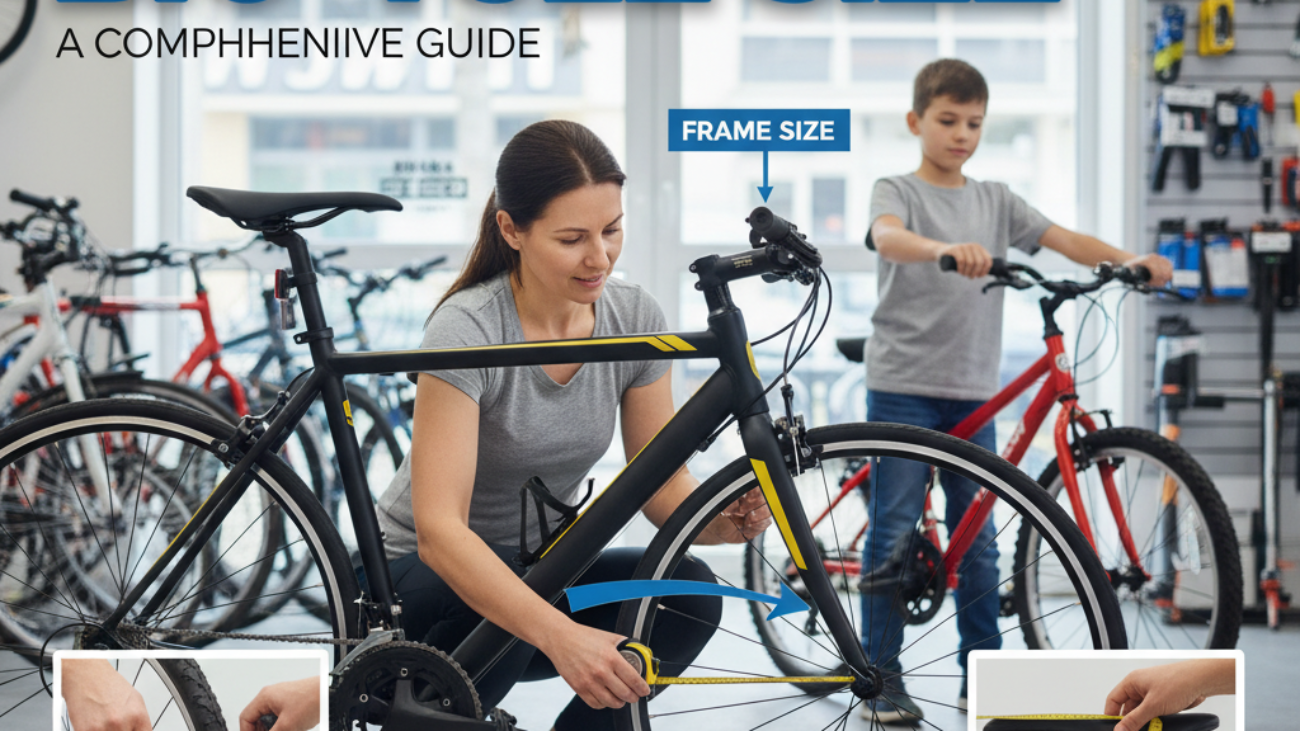
Measuring Frame Size for Road Bikes
- Find the center of the crank axle (bottom bracket).
- Measure up to the top of the seat tube.
- This distance is usually given in centimeters. Road bikes are commonly sized by this method.
- Compare your inseam and this measurement to a road bike size chart.
Measuring Frame Size for Mountain Bikes
- Locate the center of the bottom bracket.
- Measure up to the top of the top tube, where it meets the seat tube.
- Mountain bikes may be sized in inches instead of centimeters.
- Check your measurement against a mountain bike sizing chart for accuracy.
Sizing Differences for Hybrids, Gravel, and E-Bikes
- Hybrid bikes use a similar measurement to road bikes, but frames are often shorter. Use both your inseam and height for best results.
- Gravel bikes follow road bike conventions but may be sized differently by some brands. Always check the manufacturer’s guide.
- E-bikes are sized using road or mountain bike methods, but motor and battery positions can affect the fit. Try to test-ride before purchasing.
Bike Size Charts 2026: Reference Tables for Every Rider
Adult Bike Size Chart (By Height and Inseam)
| Height (cm) | Inseam (cm) | Road Bike Size (cm) | Mountain Bike Size (inches) |
|---|---|---|---|
| 150-160 | 65-70 | 47-49 | 13-15 |
| 161-170 | 71-75 | 50-52 | 15-17 |
| 171-180 | 76-81 | 53-57 | 17-19 |
| 181-190 | 82-86 | 58-60 | 19-21 |
| 191-200 | 87-91 | 61-63 | 21-23 |
Kids’ Bike Size Chart
| Age | Height (cm) | Bike Wheel Size (inches) |
|---|---|---|
| 2-4 | 85-100 | 12 |
| 4-6 | 100-115 | 14 |
| 6-8 | 115-130 | 16 |
| 8-10 | 130-140 | 20 |
| 10-12 | 140-150 | 24 |
Women’s vs. Men’s Sizing Differences
- Women-specific bikes have shorter top tubes for a shorter reach and narrower handlebars for smaller shoulders.
- Men’s frame geometry generally supports longer torsos and arms.
- Choose based on comfort and fit, not just gender labels.
Digital Tools and Online Calculators for Bike Sizing in 2026
Latest Apps and Technology Solutions
- Mobile apps can guide you in taking body measurements and recommend bike sizes.
- Some tools create a 3D avatar based on your body scan for even more accurate sizing.
- Many bike brands offer online fit calculators updated for new models in 2026.
Pros and Cons of Online Fit Calculators
- Pros: Quick, easy, available anytime; personalized
- Cons: May not consider unique body shapes; final adjustments might still be needed
- Always confirm calculator results with a test ride or professional fitting if possible.
Troubleshooting and Special Fit Scenarios
What If You’re Between Sizes?
- Try both sizes if possible. Pick the smaller size for agility, larger for more comfort.
- Adjust seat post and handlebar height for a more precise fit.
- You can change the stem length to fine-tune reach.
Sizing Tips for Unique Body Types (Tall, Short, Long Legs/Torso)
- Long legs, short torso: Choose a smaller frame and raise the seat post.
- Short legs, long torso: Select a frame with a longer top tube or add a longer stem.
- Very tall or short riders may need custom frames for ideal comfort and safety.
Custom and Adaptive Bike Fit Options
- Custom bikes can fit every measurement, but are more expensive.
- Adaptive fittings for disabilities or injuries use special components for maximum comfort and safety.
- Consult a professional if you have special fitting needs.
Advanced Fit Advice: Insights from Expert Bike Fitters
The Role of ‘Reach’ and ‘Stack’ in Modern Sizing
Reach is the horizontal distance from the center of the bottom bracket to the top center of the head tube. Stack is the vertical distance from the bottom bracket to the same point. Both are important for fine-tuning a bike’s fit for your flexibility and riding style. In 2026, most bike brands highlight reach and stack numbers in size charts.
Professional Fitting vs. DIY: When to Seek Help
- Do-it-yourself measurements work well for most people and save money.
- If you compete, have injuries, or can’t get comfortable, see a certified bike fitter.
- Bike fit professionals use motion capture and pressure maps for perfect adjustments.
Real-World Cases: Success Stories and Common Missteps
Rider Testimonials: Nailing the Fit
- Emma, 15: “Measuring my inseam correctly made my rides more fun and pain-free.”
- Ray, 18: “Switching to a longer stem helped my posture and stopped hand numbness.”
Top 5 Sizing Mistakes and How to Avoid Them
- Ignoring inseam measurement—always measure carefully.
- Buying the wrong style frame—always match bike type to your needs and terrain.
- Setting the saddle too high or low—double-check after adjusting frame size.
- Overlooking arm span—crucial for good control and steering.
- Skipping a test ride—always try before you buy, if you can.
FAQ: How to Measure Bicycle Size
- Q: What’s the most important measurement?
A: Inseam length is the best starting point for bike sizing. - Q: Can I use my height alone?
A: Height helps but is best combined with inseam, arm span, and torso length. - Q: Do I need special tools?
A: Simple tools like a tape measure and book are enough for most riders. - Q: Is women’s bike sizing always different?
A: Not always—choose the bike that feels and fits best. - Q: What if my measurements don’t match the chart exactly?
A: Adjust with seat posts, stems, or ask a bike shop for advice.
Final Bike Fit Checklist Before You Buy or Ride
- Check your inseam, height, arm span, and torso length measurements.
- Compare your numbers to updated bike size charts for 2026.
- If you are between two sizes, test both if possible.
- Adjust seat and handlebars for comfort after picking your frame size.
- Test-ride your chosen bike before finalizing your purchase.
- If you have any doubts, consult a bike fitting expert for advice.
By following these step-by-step instructions to measure bicycle size, you can ensure a safer, more comfortable, and more enjoyable ride. Accurate bike sizing prevents injuries, boosts your performance, and makes cycling fun, no matter your age or experience level. Remember, the time you spend finding the right size is always worth it. Safe cycling!