
Why Getting the Right Bike Frame Size Matters in 2026
Impact on Comfort, Performance, and Injury Prevention
Choosing the correct bike frame size is one of the most important steps in bike buying or fitting. The right bike frame size helps keep you comfortable, boosts your performance, and lowers the risk of injury. Riding a bike that’s too big or too small can lead to body pain, muscle strain, and even accidents. A good fit means you enjoy every ride more and want to bike more often.
Common Mistakes When Sizing a Bike Frame
- Guessing based on your height only
- Ignoring inseam length
- Overlooking bike type differences
- Not double-checking with sizing charts
Avoiding these mistakes makes it easier to find the perfect bike frame size for you.
Essential Tools & Prep for Measuring a Bike Frame
What You Need (Tape Measure, Level, etc.)
- Measuring tape (preferably metric)
- Spirit level
- Book or flat object (for inseam measurement)
- Notebook or printed checklist
- Calculator (optional)
Setting Up: Prep Your Bike and Workspace
- Clean your bike so the tubes are clearly visible.
- Park the bike on flat ground.
- Make sure there’s enough light in the workspace.
Printable Measurement Checklist (Downloadable Resource)
Print out a checklist to keep track of all your measurements. This helps prevent confusion and saves time while measuring your bike frame size.
How to Measure Your Body for Bike Sizing
Inseam Measurement – Step-by-Step with Visual Guide
- Stand straight, shoes off, back against a wall.
- Place a book between your legs, as if sitting on a bike saddle.
- Lift the book firmly to your crotch.
- Mark the top of the book on the wall.
- Measure from the floor to the mark. This is your inseam.
Body measurements are important for choosing the correct bike frame size.
Height, Torso, and Arm Length: When and How to Measure
- Height: Stand against a wall, keep feet together, mark top of head, measure to floor.
- Torso length: Measure from the base of the neck to the top of the pelvis.
- Arm length: Measure from shoulder to wrist.
Use these measurements to compare with sizing charts for accuracy.
Downloadable Sizing Worksheet
You can download worksheets to easily record your body and bike measurements.
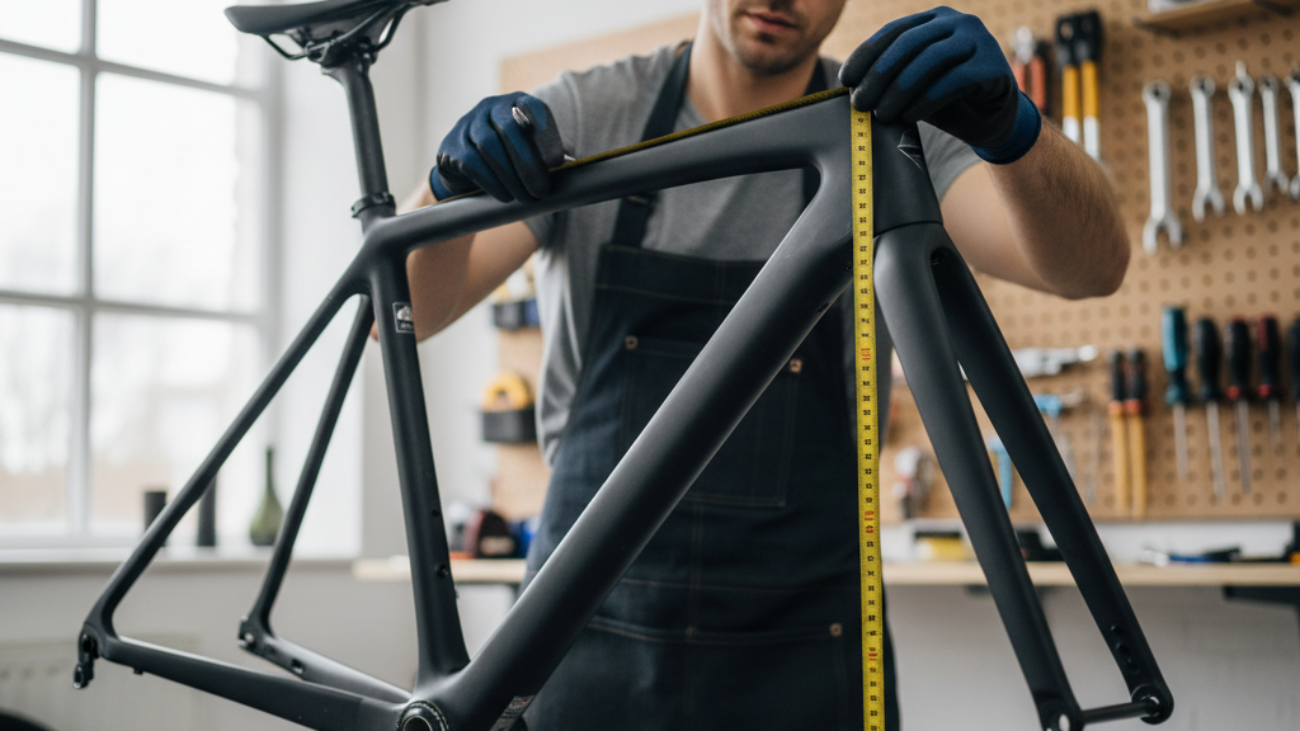
Step-by-Step: How to Measure A Bike Frame
Seat Tube Methods (Center-to-Top vs. Center-to-Center)
- Center-to-top: Measure from the center of the bottom bracket (the axle where pedals turn) up to the top of the seat tube.
- Center-to-center: Measure from the center of the bottom bracket to the center of the top tube.
The seat tube measurement is the most common way to define bike frame size.
Top Tube and Reach: Accurate Measuring
- Top tube: Measure from the center of the seat tube to the center of the head tube.
- Reach: Measure horizontally from the center of the bottom bracket to the center of the top tube where it meets the head tube.
Top tube and reach help determine how stretched out you’ll be while riding.
How to Read Manufacturer Geometry Charts
- Locate the geometry chart for your bike brand and model.
- Find the seat tube length, top tube length, and reach measurements.
- Match your own measurements to the chart to select the best frame size.
Interactive Frame Measurement Diagram
Many online resources and bike stores feature interactive diagrams to help you compare your measurements visually. Use them for double-checking your numbers.
Sizing Formulas and Charts for Different Bike Types (2026 Update)
Road Bikes: Latest Sizing Formulas & Chart
Common formula: Inseam (cm) x 0.67 = Frame size (cm)
| Inseam (cm) | Frame Size (cm) |
|---|---|
| 70 | 47 |
| 75 | 50 |
| 80 | 54 |
| 85 | 57 |
| 90 | 60 |
Mountain Bikes: How Sizing Differs and What to Watch For
MTB frames are usually sized in inches. Formula: Inseam (cm) x 0.66 = Frame size (in)
| Inseam (cm) | Frame Size (in) |
|---|---|
| 70 | 17 |
| 75 | 19 |
| 80 | 21 |
| 85 | 22 |
| 90 | 24 |
Hybrid, Gravel, and Commuter Bikes
Many hybrids and gravel bikes follow road bike sizing but may also be listed as S, M, L, etc. Always check sizing charts if unsure.
E-Bikes: Special Sizing Considerations for 2026
- Extra weight may affect handling, so frame size comfort is even more important.
- Battery and motor placement can slightly alter frame geometry, so always test ride if possible.
Advanced Frame Sizing: Geometry, Trends, and Pitfalls
Stack, Reach, and Standover Height Explained
- Stack: Vertical distance from center of bottom bracket to top of the head tube.
- Reach: Horizontal distance from the center of the bottom bracket to head tube.
- Standover height: Distance from the ground to the top of the top tube.
These measurements help you find a frame that fits your body and style of riding.
Understanding Geometry for Mixte/Unisex/Female-Specific Frames
- Mixte/unisex frames work for many body types due to their design.
- Female-specific frames sometimes have shorter top tubes or different angles for comfort.
How Sizing Has Evolved in the Past Year
Manufacturers now offer more detailed charts and interactive tools. Frame geometry is also more varied, so always check updated resources for 2026 before deciding.
Special Sections: Women’s, Kids’, and Unisex Bike Frame Sizing
Women’s Frames: Anatomy Differences, Sizing Strategies
- Women may have shorter torsos or arms, so reach and stack are key considerations.
- Always try both unisex and women’s models.
Kids’ Bikes: Growth Room, Safety, and Adjustability
- Pick a size allowing a bit of growth room, but not so big the child can’t handle the bike.
- Check if they can touch the ground when sitting, and apply brakes easily.
- Choose models with adjustable seat and handlebar heights.
Choosing Unisex and Mixte Frame Sizes
Mixte and unisex bikes often fit a wide range of people. Use general body measurements and compare with sizing guides. Test rides are very helpful.
Troubleshooting Bike Fit: Adjustments When the Size Isn’t Perfect
Signs Your Frame Size Is Off
- Pain in knees, back, or shoulders after riding
- Trouble reaching handlebars or pedals comfortably
- Feeling too stretched out or cramped
Quick Adjustments for Better Comfort
- Raise or lower seat height
- Move saddle forward or backward
- Adjust handlebar height or angle
When to Consider a Professional Bike Fit
- If you experience ongoing pain or discomfort
- If adjustments do not solve your problems
- If you want to maximize performance or ride long distances
FAQ: Answering 2026’s Most-Asked Bike Frame Sizing Questions
- How do I know if my frame is the right size?
- Can I use the same frame size for different bike types?
- What if I’m between two sizes?
- How often should I remeasure for sizing?
- What do I do if my measurements don’t match any chart?
Check these answers above or consult updated sizing resources every year.
Printable and Interactive Resources for Bike Frame Sizing
Downloadable Charts and Worksheets for Home Use
Find and print sizing charts and worksheets from trusted bike brands. Record every measurement and update regularly.
Trusted Online Sizing Calculators (2026 Edition)
- Global Bike Fit Calculator
- Online tools from major bike brands
- Third-party sizing apps
Recommended Apps and Tools for Accurate Measurements
Many apps now help you measure inseam, height, and frame details with your phone. These are especially helpful for online bike shopping.
Getting the Perfect Fit Beyond The Numbers
The Role of Test Rides and Professional Fits
- Always test ride before purchase if possible
- Professional fits can fine-tune the fit even after you buy
- A good fit improves comfort, efficiency, and fun
How to Use Manufacturer and Store Sizing Support
- Ask for help at your local bike shop
- Use chat or support lines from bike brands
- Many stores now offer virtual fitting support in 2026
Summary: Key Steps and Next Actions
- Measure your body and your current bike carefully
- Check measurements with reliable sizing resources and charts
- Test bikes in person or use virtual fit tools before deciding
- If in doubt, ask for professional help to make sure your bike frame size is perfect for you
Get ready to enjoy every ride with the right bike frame size. Start with the steps above and explore more with the latest resources for an even better fit—your body will thank you!