
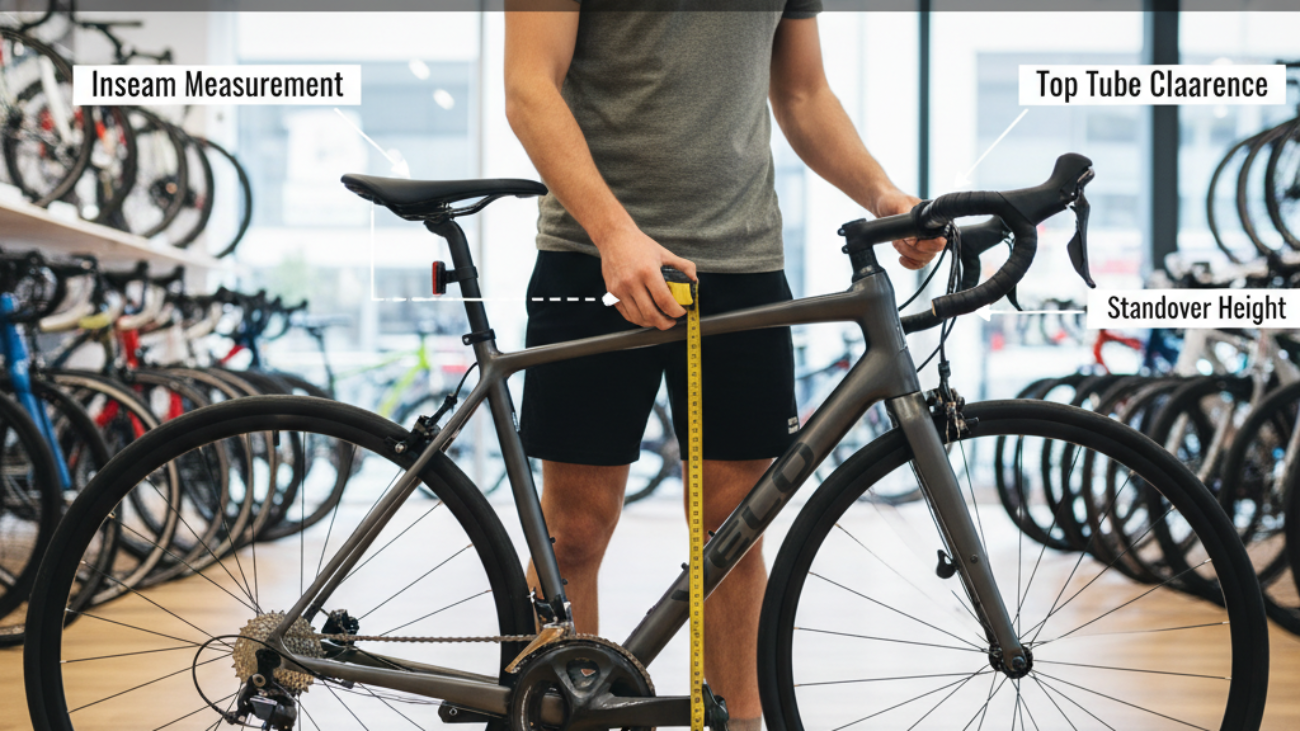
Why Correct Bike Frame Size Matters
Impact on Comfort, Performance, and Injury Prevention
Choosing the right bike frame size is essential for every cyclist. The proper frame size makes riding comfortable. It helps prevent injuries and supports better performance. If your bike is too big or too small, you may feel pain in your back, knees, or wrists. A correctly sized bike frame lets you ride longer and enjoy cycling more.
Common Misconceptions About Bike Sizing
Many people believe that your height alone decides your bike frame size. This is not true. Both your inseam (leg length) and other body measurements matter. Others think that every bike brand sizes frames the same way, but sizing can change between brands and bike types.
Understanding Key Bike Frame Size Measurements
Rider Measurements Needed (Inseam, Height, Arm Reach)
To find the perfect bike frame size, you need to measure yourself:
- Inseam: The length from the floor to your crotch, useful for matching your legs to the bike frame.
- Height: Your full height, from the floor to the top of your head.
- Arm Reach: The length from your shoulder to your wrist, helpful for handlebar fit.
Frame Measurements Explained (Seat Tube, Top Tube, Stack & Reach)
Bike frames are measured in several ways:
- Seat Tube: The tube running from the bottom bracket up to where the saddle sits.
- Top Tube: The tube between the seat and the handlebars.
- Stack: The vertical distance from the bottom bracket up to the top of the head tube.
- Reach: The horizontal distance from the bottom bracket to the center of the top of the head tube.
Geometry Differences Across Bike Types
Different bike types—like road, mountain, and hybrid—use different geometry. Road bikes often have longer, lower frames for speed. Mountain bikes are built shorter and taller for control. Hybrids and gravel bikes mix features for comfort and mixed surfaces.
Step-by-Step Guide: How to Measure for Your Ideal Bike Frame Size
Tools You’ll Need (Tape Measure, Book, Level, Calculator)
- Measuring tape (metric or imperial)
- Sturdy book (to act as a seat against your body)
- Bubble level (optional, for accuracy)
- Calculator (or phone app)
- Paper and pencil (for notes)
Measuring Your Inseam Accurately
- Stand up straight without shoes, back against a wall.
- Place the book between your legs, spine facing up. Push it firmly against your crotch, as a bike seat would.
- If available, use the bubble level to keep the book flat and parallel to the floor.
- Mark where the top of the book touches the wall.
- Measure the distance from the floor to your mark. This is your inseam measurement.
Matching Inseam to Frame Size Using Formulas
- For road bikes: Multiply your inseam (in centimeters) by 0.67. This gives the ideal frame size (seat tube length) in centimeters.
- For mountain bikes: Multiply your inseam (in centimeters) by 0.60, or convert the road bike cm result to inches (divide by 2.54) for most MTB frames.
Example: Inseam = 80 cm. Road bike: 80 x 0.67 = 53.6 cm frame.
Double-Checking With Height-Based Charts
- Look up charts for your bike type (road, mountain, hybrid).
- Find your height row and check the recommended frame size.
- If you are between sizes, consider your riding style: smaller size for agility, larger for comfort.
Printable Checklist for Home Sizing
- [ ] Tape measure
- [ ] Solid book
- [ ] Level (optional)
- [ ] Calculator
- [ ] Chart or formula reference
- [ ] Notepad
- [ ] Good lighting
- [ ] Helper (optional, for accuracy)
Using Frame Size Charts and Calculators (2026 Updated)
Road Bike Frame Size Chart
| Rider Height (cm) | Frame Size (cm) | Common Size (S/M/L) |
|---|---|---|
| 150-160 | 47-49 | XS/S |
| 160-170 | 50-52 | S/M |
| 170-180 | 54-56 | M/L |
| 180-190 | 58-60 | L/XL |
| 190-200 | 61-63 | XL/XXL |
Mountain Bike Frame Size Chart
| Rider Height (cm) | Frame Size (inches) | Common Size |
|---|---|---|
| 150-160 | 13-15″ | XS/S |
| 160-170 | 15-17″ | S/M |
| 170-180 | 17-19″ | M/L |
| 180-190 | 19-21″ | L/XL |
| 190-200 | 21-23″ | XL/XXL |
Hybrid and Gravel Bike Frame Size Chart
| Rider Height (cm) | Frame Size (cm) | Common Size |
|---|---|---|
| 150-160 | 42-46 | XS/S |
| 160-170 | 46-50 | S/M |
| 170-180 | 50-54 | M/L |
| 180-190 | 54-58 | L/XL |
| 190-200 | 58-61 | XL/XXL |
Interactive Online Calculators: Should You Trust Them?
Online bike frame size calculators can give a quick suggestion based on your height and inseam. However, these calculators may not account for your body proportions or allow for personal preference. They are a good starting point, but always double-check with charts and measurements.
Special Considerations for Unique Riders & Bike Types
Sizing for Short, Tall, or Proportionally Unique Riders (Real-Life Examples)
If your legs are longer or shorter than average for your height, use your inseam to choose your bike frame size. Tall riders might need custom bikes or longer stems. Short riders might consider bikes with lower top tubes and shorter reach. Try out different frame sizes if possible.
Women’s-Specific Frames and Considerations
Women’s bikes sometimes have shorter top tubes, smaller handlebars, and specific saddles. These features can help women achieve a better fit, especially if their torso or arms are shorter in proportion to their height. Try both unisex and women’s-specific frames to see what feels best.
Kids’ Bike Sizing Guide
For children, bike size is usually matched to inseam or wheel size, not frame size. Always prioritize safety and allow a little room for growth, but not so much that the child can’t touch the ground safely while seated.
Electric, Folding, and Custom Bikes: What’s Different?
Electric and folding bikes often use unique frame shapes. Consult manufacturer guidelines, as standard sizing rules may not apply. For custom bikes, a professional fitting is best, especially if you have unique body measurements.
Advanced Topics: Beyond Basic Frame Sizing
Fine-Tuning Fit: Stack, Reach, and Custom Geometry
Advanced cyclists adjust stack (vertical fit) and reach (horizontal fit) for better performance. A professional fitting can help you find the best handlebar and saddle position for power and comfort. Some brands allow for custom geometry, adjusting frame dimensions for your body.
Understanding Frame Materials and Fit Impact
Frame material (aluminum, carbon, steel, titanium) affects not just ride feel, but sometimes, the sizing as well. Some frames may flex more or less, changing how they fit. Always test ride if you can.
When to Seek a Professional Bike Fitting
If you compete, have ongoing discomfort, or want a perfect fit, visit a professional bike fitter. They use advanced tools and can fine-tune your entire bike for your body and riding style.
Quick-Reference Tools and Resources
Downloadable Sizing Charts (Inches & CM)
- Road, mountain, hybrid, and kids’ sizing charts available for print online. Search “2026 bike frame size downloadable chart.”
- Keep printed charts for when you shop.
Bike Sizing FAQs for 2026
- Can frame size be adjusted later? Minor changes are possible (stem, seat post), but frame size is permanent.
- Does brand matter? Yes, always check the sizing chart for each brand as sizing can vary.
- What if I’m between sizes? Choose smaller for more control, larger for long-distance comfort.
Bicycle Fit Checklist Before You Buy
- [ ] Can you stand over the frame with a 2-5 cm gap?
- [ ] Can you reach the handlebars without straining?
- [ ] Do your knees feel comfortable while pedaling?
- [ ] Can you touch the ground with your feet when seated? (important for kids and new riders)
- [ ] Test-ride if possible before buying.
Frequently Asked Questions About Measuring Bike Frame Size
- Q: Can I use just my height to choose a bike frame size?
A: No. Inseam is usually more accurate, but both are best for choosing bike frame size. - Q: What tools do I need to measure at home?
A: Use a measuring tape, a book, and a calculator. - Q: Are charts enough, or should I try the bike?
A: Always try the bike if you can for the best fit. - Q: What should I do if my measurements sit between two sizes?
A: Consider your riding style, flexibility, and try both sizes if possible.
Remember: Getting the right bike frame size is key for comfort, safety, and fun. Measure carefully, use reliable charts, and don’t be afraid to ask for professional help.
Next Steps: Print your checklist, measure at home, compare your numbers to updated size charts, and always ask for a test ride before you buy your next bike!