
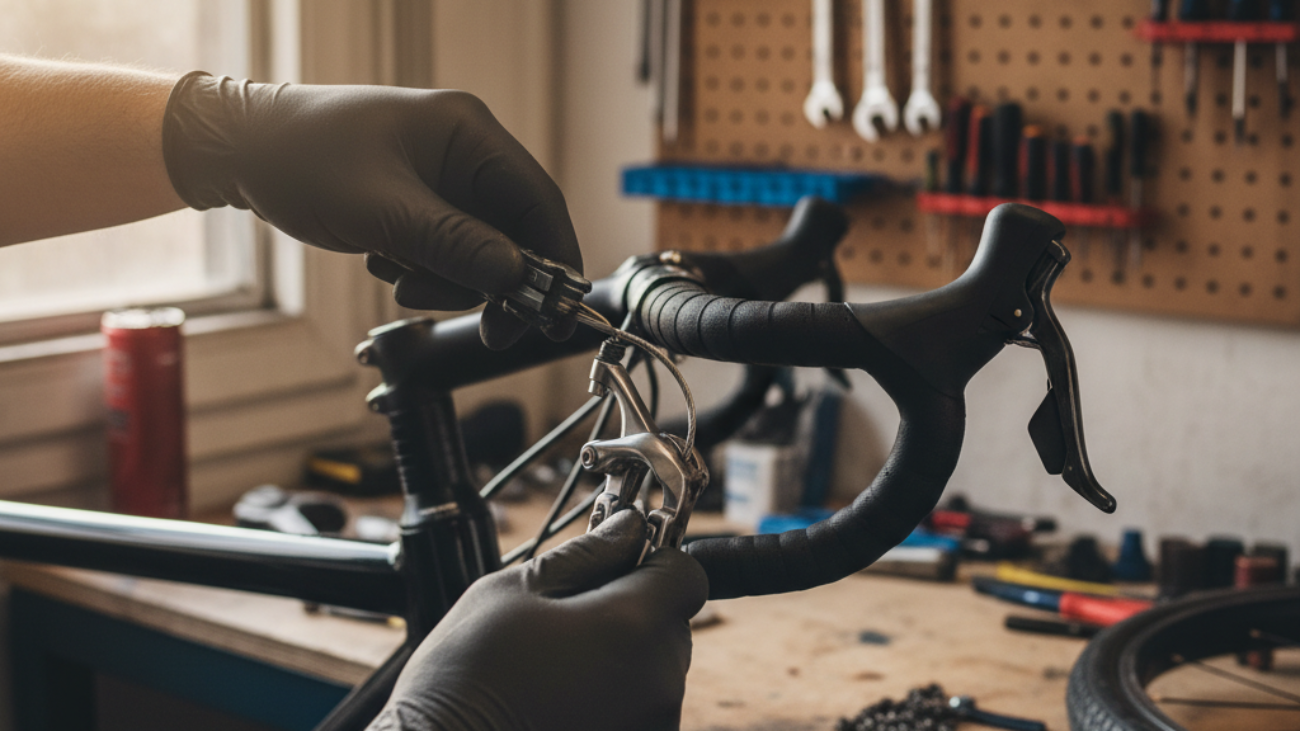
Quick Reference: Tools and Safety Essentials for Tightening Bicycle Brakes
Tools Checklist
- Allen wrenches (usually 4mm, 5mm, or 6mm)
- Phillips and flat-head screwdrivers
- Cable cutters
- Needle-nose pliers
- Bike-specific lubricant
- Bicycle repair stand (optional but recommended)
- Clean rag or towel
- Tire levers (for some brake types)
At-a-Glance Safety Checklist Before and After Adjustment
- Check that the bike is stable and won’t tip over
- Test brakes before riding after any adjustment
- Wear gloves to protect hands
- Keep fingers away from moving parts
- Ensure brake cables or hoses are not pinched
Understanding Different Bicycle Brake Types (2026 Update)
Rim Brakes (V-Brake, Caliper)
Rim brakes grip the wheel rim to slow down. V-brakes and caliper brakes are the two most common types. They are simple and easy to adjust.
Mechanical Disc Brakes
Mechanical disc brakes use a cable to squeeze a rotor attached to the wheel. They offer strong braking power and work well in all weather.
Hydraulic Disc Brakes
Hydraulic disc brakes use fluid instead of a cable. They provide smooth, powerful braking with less hand effort but need more care.
Less Common Systems (Drum, Coaster, and Others)
Some bicycles have drum, coaster, or other types of brakes. These are less common and often found on older bikes or specialty models.
Preparing for Brake Adjustment: Inspection and Diagnosis
Checking for Common Brake Issues
- Lift the bike or use a stand so wheels spin freely.
- Squeeze the brake levers. Watch for slow response, spongy feel, or scraping sounds.
- Look for worn brake pads, frayed cables, or loose bolts.
- Spin each wheel to check if brakes rub or do not contact the rim or rotor.
Identifying Your Brake System
- Observe the brake setup at the wheel. Is there a cable pulling on pads or is there a thin hose?
- If unsure, check the bike’s model or consult the manual.
How to Tighten Rim Brakes Effectively
Adjusting Cable Tension
- Locate the barrel adjuster near the brake lever or caliper.
- Turn the barrel adjuster counterclockwise to tighten the cable and move brake pads closer to the rim.
- If more adjustment is needed, use an Allen wrench to loosen the cable anchor bolt at the brake arm.
- Pull the cable slightly tighter, then retighten the anchor bolt.
Aligning and Tightening Brake Pads
- Check pad alignment: pads should touch the rim flat and not the tire.
- If misaligned, loosen the pad mounting bolt with an Allen wrench.
- Reposition the pad so it sits flat against the rim, then retighten.
- Repeat for both sides. Squeeze the lever to check fit before final tightening.
Centering and Final Tightening Tips
- Make sure both brake pads hit the rim at the same time.
- If not, use the small centering screw usually found on one or both brake arms.
- Turn the screw until both pads are even.
- Double-check that all bolts are tight. Test the brakes by squeezing the lever hard.
How to Tighten Mechanical Disc Brakes
Cable and Barrel Adjuster Techniques
- Find the barrel adjuster at the brake lever or caliper. Turn it counterclockwise to take up slack.
- If more tension is necessary, loosen the cable anchor bolt at the caliper with an Allen wrench.
- Pull the cable until the pads are closer to the rotor, then retighten the anchor bolt.
Caliper Centering with Lever Squeeze Method
- Loosen both caliper mounting bolts slightly.
- Squeeze the brake lever fully. This centers the caliper over the rotor.
- While holding the lever, retighten both bolts evenly.
Pad Alignment and Rotor Clearance
- Look through the caliper. Make sure the pads are evenly spaced from the rotor.
- If rubbing occurs, adjust the caliper side-to-side until the rotor spins freely.
- Check for pad wear and replace if too thin.
How to Tighten Hydraulic Disc Brakes Safely
Recognizing Signs of Hydraulic Brake Looseness
- Brake lever feels spongy or can be pulled to the handlebar
- Brakes seem less powerful or inconsistent
Bleeding and Lever Adjustment Tips
- Bleeding involves removing air from the hydraulic system. Use a bike-specific bleed kit and follow the bike manufacturer’s instructions.
- Some systems allow lever reach adjustment. Turn the small knob or screw near the lever to set a comfortable reach.
- Top up hydraulic fluid only with the recommended type for your brake system.
When to Seek Professional Help
- If brakes do not tighten after adjustment
- If you see leaking fluid
- If braking performance is very poor or unsafe
Advanced Troubleshooting: When Tightening Bicycle Brakes Isn’t Enough
Persistent Squeaks, Rubbing, and Spongy Feel
- Clean rims or rotors with rubbing alcohol.
- Check for dirt, oil, or damage on pads/rotors.
- Replace pads if noise continues after cleaning.
- If lever still feels spongy, air may be in the system (hydraulic). Bleed the brakes.
Cable Wear, Fray, or Housing Issues
- Inspect cables for any frayed sections or rust.
- Replace cables or housings at the first sign of damage.
- Lubricate cables to prevent wear and improve response.
Pad and Rotor Replacement Guidance
- Replace pads when less than 2mm thick or if unevenly worn.
- Change rotors when warped, cracked, or below minimum thickness (usually stamped on rotor).
- Always use parts recommended for your brake system.
Common Mistakes Beginners Make When Tightening Brakes (and How to Avoid Them)
Over-tightening vs. Under-tightening
- Over-tightening can cause brakes to rub or parts to break.
- Under-tightening makes brakes weak or slow to respond.
- Always follow manufacturer’s torque specs when possible.
Misaligned Pads and Unbalanced Calipers
- Pads must hit the rim or rotor squarely.
- Check both sides by sight and test spinning the wheel.
Skipping Safety Checks
- Never skip a full brake test after work.
- Squeeze both levers and push the bike forward and back to confirm stopping power.
Video & Visual Guide: Tightening Bicycle Brakes Step by Step
Quick Visual Steps for Each Brake Type
- Rim brakes: show how to use the barrel adjuster and align pads
- Mechanical disc: demonstrate centering caliper and cable adjustments
- Hydraulic disc: basic bleeding and lever reach adjustments
How-To Video Resources for 2026
- Check YouTube for latest “How to tighten bicycle brakes” videos
- Brand-specific tutorials for popular brake models
- Always use recent videos for the newest brake technologies
Regional Brake Convention Differences (Left vs. Right Lever)
Setting Up Brakes for Local Road Regulations
- In some countries, the right lever is for the front brake; in others, it’s the left
- Check your country’s standard or local laws
- If swapping, reroute cables or hoses carefully
Tips for Travelers and Expats
- If renting or borrowing a bike abroad, test lever setup before riding
- Learn the local standard to avoid confusion and stay safe
FAQ: How to Tighten Bicycle Brakes and Related Questions (2026)
Emergency On-Ride Adjustments
- If brakes become loose while riding, turn the barrel adjuster to restore function temporarily
- A roadside multi-tool can fix minor issues fast
When to Replace vs. When to Repair
- Replace parts if worn, rusted, or damaged
- Repair by adjusting if pads, cables, and bolts are in good condition
Safety Precautions for E-Bikes and New Brake Technologies
- Many e-bikes use hydraulic or power-assisted brakes; check your manual
- Some new systems alert you if brake performance drops—pay attention to warnings
- Never modify e-bike brake systems unless trained or certified
Summary: Key Tips and Next Steps
- Always identify your brake system first.
- Use the right tools and follow each step closely.
- Test brakes carefully after adjustment; safety comes first.
- If brakes still feel wrong, seek expert help quickly.
- Regular checks prevent most brake problems and keep you riding safe.
Tightening bicycle brakes sounds simple, but a careful step-by-step approach ensures safety and great performance. Whether on rim, mechanical disc, or hydraulic systems, following this guide helps you maintain your bicycle brakes effectively in 2026 and beyond.