Understanding Bicycle Brake Types and Why Proper Tightening Matters
Overview of Brake Systems: Rim, V-Brake, and Disc
Bicycles use different types of brakes, each with unique tightening methods. The main systems are rim brakes, V-brakes, and disc brakes. Rim brakes grip the wheel’s edge, V-brakes are a stronger type often found on mountain bikes, and disc brakes use a metal disc attached to the wheel hub. Understanding these helps you tighten brakes on a bicycle more effectively.
Signs Your Bike Brakes Need Tightening
- Brake lever pulls close to the handlebar before stopping the bike.
- Squeaking or grinding noises when braking.
- The bicycle takes longer than usual to stop.
- Brake pads look far from the rim or disc.
Safety Implications and Common Issues
Loose brakes can make it hard to stop quickly, leading to crashes or injuries. Properly tightened brakes on a bicycle ensure your safety, smooth riding, and longer brake life. Common issues are soft levers, rubbing pads, or brakes not stopping the wheel quickly.
Tools You’ll Need (and Home Alternatives)
Standard Bike Repair Tools Explained
- Allen wrenches (usually 4mm, 5mm, and 6mm)
- Cable puller or pliers
- Phillips and flathead screwdrivers
- Bicycle repair stand (optional)
Household Item Substitutes for Quick Fixes
- Adjustable wrench
- Needle-nose pliers
- Old towels for cleaning
- Rubber gloves (for grip)
Preparing Your Workspace
- Find a clean, flat area to work—garage, driveway, or porch.
- Lay out tools within reach.
- If possible, flip the bike upside down or use a bike stand.
- Check that your bike is clean, focusing on wheels and brakes.
How to Tighten Rim Brakes, V-Brakes, and Disc Brakes
Tightening Rim Brakes: Step-by-Step Instructions
- Squeeze the brake lever and observe the brake pads. If they don’t touch the rim firmly, they need tightening.
- Locate the barrel adjuster near the lever or brake arm. Turn it counterclockwise to tighten minor slack.
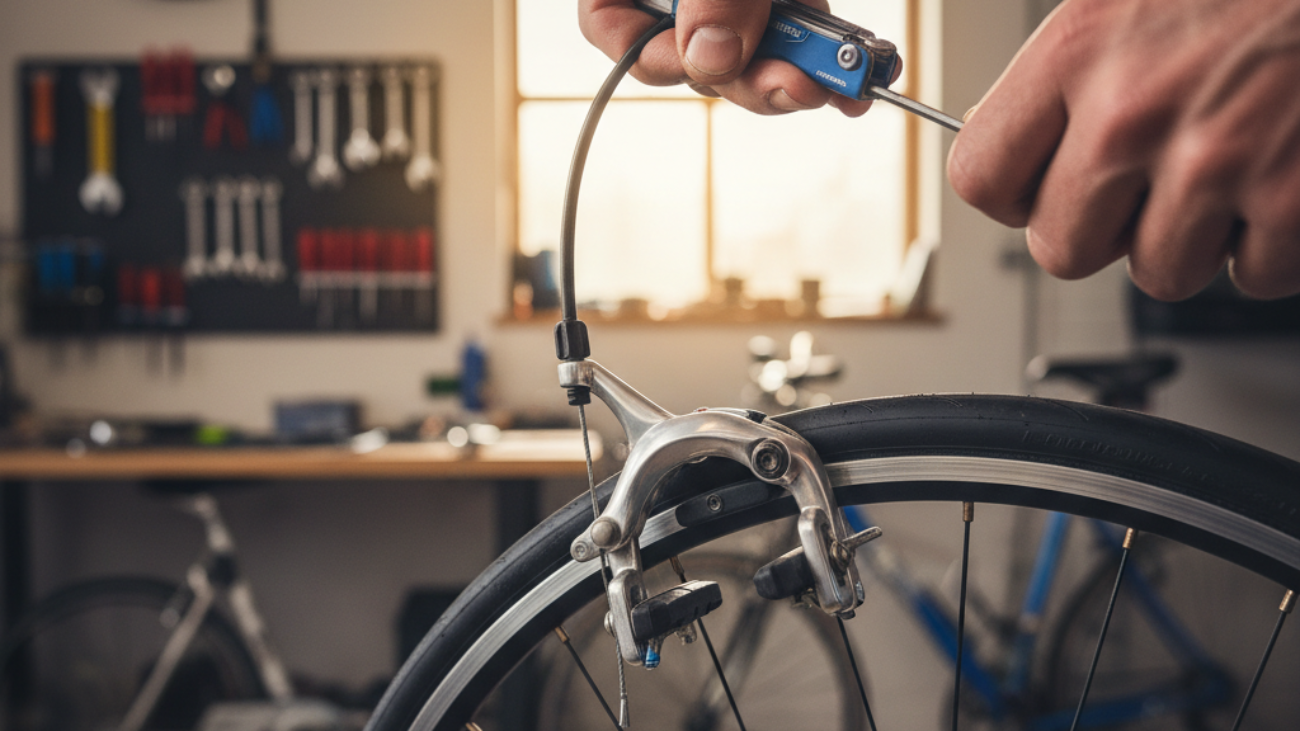
- If more tension is needed, use an Allen wrench to loosen the cable bolt on the brake arm.
- Pull the brake cable tighter using pliers, then retighten the bolt.
- Test the brake lever. The pads should contact the rim midway through the lever pull.
Adjusting V-Brakes for Better Performance
- Check if V-brake pads hit the rim evenly when squeezing the lever.
- If not, turn the barrel adjuster to remove slack.
- For more adjustment, loosen the cable clamp with an Allen wrench.
- Pull the cable until the brake pads sit close to the rim, but not rubbing.
- Secure the cable clamp and squeeze the lever to check tightness.
- Adjust pad position if needed using the bolts holding each pad.
How to Tighten Disc Brakes (Mechanical and Hydraulic)
- For mechanical disc brakes, adjust the barrel adjuster to take up slack.
- If still loose, loosen the cable bolt with an Allen wrench, pull the cable tighter, then retighten.
- Check that brake pads are close but not touching the disc.
- For hydraulic brakes, pump the brake lever several times. If it still feels spongy, bleeding the brakes may be necessary (see troubleshooting).
- Never adjust bolts on the caliper unless realigning pads.
Visual and Printable Checklists
- Check all cable ends for fraying.
- Make sure pads are not worn too thin.
- Test brakes by spinning the wheel and stopping it.
- Confirm bolts on brake arms and levers are tight.
Troubleshooting: When Brakes Still Feel Loose or Rub
Diagnosing Persistent Brake Issues
- Brake lever still pulls too close: Cable might be stretched, or housing is worn.
- One pad rubs: Caliper may be misaligned. Realign and retighten mounting bolts.
- No improvement: Cables or pads might need replacement.
What to Do if the Lever Remains Soft or Spongy
- For rim and V-brakes, check for stretched cables and tighten or replace if needed.
- For hydraulic brakes, air may be in the line—bleed the brakes if you know how, or visit a bike shop.
Pad Alignment Problems and Solutions
- Loosen the pad mounting bolt.
- Align the pad so it sits flat against the rim or disc when the lever is pulled.
- Tighten the bolt securely while holding the pad in place.
- Ensure pads do not touch the tire or miss the braking surface.
“What Could Go Wrong” and How to Fix It
- Stripped bolts: Replace with new bolts to avoid brake failure.
- Frayed cables: Replace to prevent unexpected brake loss.
- Pad wear indicators hit rim: Replace brake pads.
Adapting Brake Tightening for Different Bicycles
Kids’ Bikes and Youth Brake Adjustments
Follow the same steps, but check that brake levers are close enough for small hands. Some bikes have adjustable levers to help kids grip and use brakes safely.
City vs. Mountain Bike Considerations
City bikes often have basic rim or drum brakes needing regular checks. Mountain bikes might have V-brakes or disc brakes, which require checking for debris and more frequent adjustment due to intense use.
Accessibility Tips: Solutions for Riders with Limited Hand Strength
- Install brake levers with built-in adjusters for easier reach and control.
- Use larger brake levers or add grip covers for more comfort.
- Switch to hydraulic disc brakes for easier, gentler braking.
Essential Post-Adjustment Safety Checks
Testing Brake Function and Pad Wear
- Spin each wheel and squeeze the brake lever. The wheel should stop quickly without much lever travel.
- Check pad thickness. Replace if below manufacturer’s line or less than 3mm thick.
Visual Safety Inspection Step-by-Step
- Check all nuts and bolts on brakes and levers for tightness.
- Ensure cables aren’t frayed, bent, or rusted.
- Inspect brake pads for even wear and proper contact area.
- Confirm the wheels spin freely when brakes are released.
Maintaining Brake Performance Over Time
- Check brake tightness every few weeks, or before big rides.
- Keep cables lubricated to prevent sticking.
- Replace pads as soon as they look worn.
- Clean braking surfaces regularly for good contact.
Upgrading and Maintaining Your Bike’s Brakes for Longevity
When to Consider a Brake System Upgrade
- Brakes require frequent tightening or repair.
- Your bike’s stopping distance feels unsafe.
- You ride in wet, muddy, or steep conditions.
- You want easier braking with less hand force.
Routine Maintenance Tips for All Riders
- Inspect brakes before every ride.
- Tighten and grease bolts regularly.
- Wipe rims, discs, and brake pads clean after rain or mud.
Helpful Tools and Gear Recommendations
- Quality Allen wrench set
- Cable cutters
- Small bottle of bike lubricant
- Spare brake pads and cables
FAQ: Everything Riders Ask About Tightening Bike Brakes
Answers to Uncommon and Common User Questions
- Q: How often should I check my bike brakes?
A: At least once a month or before long rides. - Q: Why do my brakes keep coming loose?
A: Worn cables or bolts, or improper installation. Check and replace if needed. - Q: Can I use oil to lubricate my brake pads?
A: Never! Only use oil on cables, never on pads or braking surfaces. - Q: Why are my brakes rubbing the tire?
A: Pads are not aligned properly. Adjust them to hit the rim or disc only.
Printable & Downloadable Guides
- Step-by-step tightening checklist (see above)
- Pad replacement schedule
- Contact info for local bike shops (make your own list!)
Further Learning and Resources for DIY Bike Maintenance
- Check out local bike co-ops and repair classes.
- Explore online videos for visual learning on how to tighten brakes on a bicycle.
- Read manufacturer manuals for your specific brake system.
- Ask questions in bike forums for community help.